Quotessence
Home / Quotes / Quote by William Saroyan

Quote by William Saroyan

“But try to remember that a good man can never die. You will see your brother many times again-in the streets, at home, in all the places of the town. The person of a man may go, but the best part of him stays. It stays forever.”

Quote by William Saroyan

Author
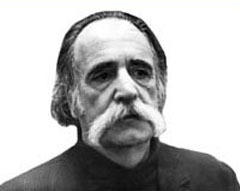
William Saroyan
William Saroyan

William Saroyan was an American playwright and novelist known for his humorous and satirical style. His works often explored social and human issues from the perspective of Armenian-American individuals. more

You May Also Like

“The affinities of all the beings of the same class have sometimes been represented by a great tree.I believe this simile largely speaks the truth. The green and budding twigs may represent existing species; and those produced during former years may represent the long succession of extinct species. At each period of growth all the growing twigs have tried to branch out on all sides, and to overtop and kill the surrounding twigs and branches, in the same manner as species and groups of species have at all times overmastered other species in the great battle for life. The limbs divided into great branches, and these into lesser and lesser branches, were themselves once, when the tree was young, budding twigs; and this connection of the former and present buds by ramifying branches may well represent the classification of all extinct and living species in groups subordinate to groups. Of the many twigs which flourished when the tree was a mere bush, only two or three, now grown into great branches, yet survive and bear the other branches; so with the species which lived during long-past geological periods, very few have left living and modified descendants. From the first growth of the tree, many a limb and branch has decayed and dropped off; and these fallen branches of various sizes may represent those whole orders, families, and genera which have now no living representatives, and which are known to us only in a fossil state. As we here and there see a thin straggling branch springing from a fork low down in a tree, and which by some chance has been favoured and is still alive on its summit, so we occasionally see an animal like the Ornithorhynchus or Lepidosiren, which in some small degree connects by its affinities two large branches of life, and which has apparently been saved from fatal competition by having inhabited a protected station. As buds give rise by growth to fresh buds, and these, if vigorous, branch out and overtop on all sides many a feebler branch, so by generation I believe it has been with the great Tree of Life, which fills with its dead and broken branches the crust of the earth, and covers the surface with its ever-branching and beautiful ramifications.”

“[I]t's difficult to make people see that what you have been taught counts for nothing, and that the only things worth having are the things you find out for yourself. Also, that when so many brands of what Chesterton calls 'fancy souls' and theories of life are offered you, there is no sense in not looking pretty carefully to see what you are going in for. [...] It isn't a case of 'Here is the Christian religion, the one authoritative and respectable rule of life. Take it or leave it'. It's 'Here's a muddling kind of affair called Life, and here are nineteen or twenty different explanations of it, all supported by people whose opinions are not to be sneezed at. Among them is the Christian religion in which you happpen to have been brought up. Your friend so-and-so has been brought up in quite a different way of thinking; is a perfectly splendid person and thoroughly happy. What are you going to do about it?' -- I'm worrying it out quietly, and whatever I get hold of will be valuable, because I've got it for myself; but really, you know, the whole question is not as simple as it looks.”