Quotessence
Home / Quotes / Quote by Peter Sloterdijk

Quote by Peter Sloterdijk

“In his treatise on the battles between the gods underlying ancient Dionysian theatre, the young Nietzsche notes: 'Alas! The magic of these struggles is such, that he who sees them must also take part in them.' Similarly, an anthropology of the practising life is infected by its subject. Dealing with practices, asceticisms and exercises, whether or not they are declared as such, the theorist inevitably encounters his own inner constitution, beyond affirmation and denial.”

Quote by Peter Sloterdijk

Work

Du mußt dein Leben ändern

Browse quotes and source details for this work. more

Author
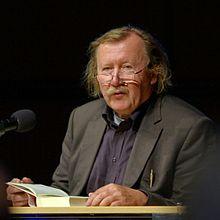
Peter Sloterdijk
Peter Sloterdijk

Peter Sloterdijk is a German philosopher born on June 26, 1947. Known for his unique philosophical thoughts and profound insights into social culture, his works cover a wide range of fields including ethics, aesthetics, and sociology, making a significant impact on the contemporary philosophical world. more

You May Also Like

“But if man genuinely produces man, it is precisely not through work and it's concrete results, not even the 'work on oneself' so widely praised in recent times, let alone through the alternatively invoked phenomena of 'interaction' or 'communication': it is through life in forms of practice. Practice is defined here as any operation that provides or improves the actor's qualification for the next performance of the same operation, whether it is declared as practice or not.”

“The stakes in this game are not low. Our enterprise is no less than the introduction of an alternative language, and with the language an altered perspective, for a group of phenomena that tradition tended to refer to with such words as 'spirituality', 'piety', 'morality', 'ethics' and 'asceticism'. If the manoeuvre succeeds, the conventional concept of religion, that ill-fated bugbear from the prop studios of modern Europe, will emerge from these investigations as the great loser. Certainly intellectual history has always resembled a refuge for malformed concepts - and after the following journey through the various stations, one will not only see through the concept of 'religion' in its failed design, a concept whose crookedness is second only to the hyper-bugbear that is 'culture'.”

“After dinner, they walked through Trafalgar Square, which was also very busy, with its stunning fountains and eye-catching statues attracting crowds of visitors. Some of these visitors enjoyed feeding pigeons and taking pictures with them. They left the noisy sounds of the square behind and walked slowly towards St. James' Park to seek the sound of silence for a change before heading home. Unlike Trafalgar Square and the surrounding areas, the park was engulfed in silence, interrupted only by the sounds of ducks and swans that moved suddenly in the pond as they approached it. As they sat on a bench facing the beautiful, peaceful pond that seemed to be in deep sleep, Alina sighed. “I miss this peace and silence. I don't think I can continue to live in the city.” “I feel the same,” he said as he laid his hand on hers, gazing out at the night. “I’m really delighted that we both like a quiet life. I really love it, although I must admit that I sometimes feel bored if I have to stay in a quiet place for too long. I guess it’s human nature. You can never please humans. No matter what the weather—shine or rain—some will always complain! Humans are so hard to please that even if you grant them an eternal easy life in Paradise, some will still want to go back to Earth, even if living on Earth means struggling, starving, bleeding, and suffering!” “I’m really impressed that you like a quiet life despite the fact that you were brought up in a large city...”

“The hero of the following account, Homo immunologicus, who must give his life, with all its dangers and surfeits, a symbolic framework, is the human being that struggles with itself in concern for its form. We will characterize it more closely as the ethical human being, or rather Homo repetitious, Homo artista, the human in training. None of the circulating theories of behaviour or action is capable of grasping the practising human - on the contrary: we will understand why previous theories had to make it vanish systematically, regardless of whether they divided the field of observation into work and interaction, processes and communications, or active and contemplative life. With a concept of practice based on a broad anthropological foundation, we finally have the right instrument to overcome the gap, supposedly unbridgeable by methodological means, between biological and cultural phenomena of immunity - that is, between natural processes on the one hand and actions on the other.”

“Something is indeed returning today - but the conventional wisdom that this is religion making its reappearance is insufficient to satisfy critical inquiries. Nor is it the return of a factor that had vanished, but, rather a shift of emphasis in a continuum that was never interrupted. The genuinely recurring element that would merit our full intellectual attention is more anthropological than 'religious' in its implications - it is, in a nutshell, the recognition of the immunitary constitution of human beings.”

“It is not only the weary Homo faber, who objectifies the world in the 'doing' mode, who must vacate his place on the logical stage; the time has also come for Homo religiosus, who turns to the world above in surreal rites, to bid a deserved farewell. Together, workers and believers come into a new category. It is time to reveal humans as the beings who result from repetition. Just as the nineteenth century stood cognitively under the sign of production and the twentieth under that of reflexivity, the future should present itself under the sign of the exercise.”

“In this book, we will naturally be dealing primarily with the manifestations of the third level of immunity. I gather material on the biography of Homo immunologicus, guided by the assumption that this is where to find the stuff from which the forms of anthropotechnics are made. By this I mean the methods of mental and physical practising by which humans from the most diverse cultures have attempted to optimize their cosmic and immunological status in the face of vague risks of living and acute certainties of death. Only when these procedures have been grasped in a broad tableau of human 'work on oneself' can we evaluate the newest experiments in genetic engineering, to which, in the current debate, many have reduced the term 'anthropotechnics', reintroduced in 1997.”