Quotessence
Home / Quotes / Quote by Peter Sloterdijk

Quote by Peter Sloterdijk

“Something is indeed returning today - but the conventional wisdom that this is religion making its reappearance is insufficient to satisfy critical inquiries. Nor is it the return of a factor that had vanished, but, rather a shift of emphasis in a continuum that was never interrupted. The genuinely recurring element that would merit our full intellectual attention is more anthropological than 'religious' in its implications - it is, in a nutshell, the recognition of the immunitary constitution of human beings.”

Quote by Peter Sloterdijk

Work

Du mußt dein Leben ändern

Browse quotes and source details for this work. more

Author
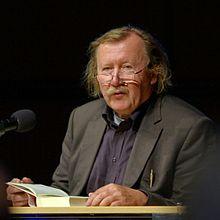
Peter Sloterdijk
Peter Sloterdijk

Peter Sloterdijk is a German philosopher born on June 26, 1947. Known for his unique philosophical thoughts and profound insights into social culture, his works cover a wide range of fields including ethics, aesthetics, and sociology, making a significant impact on the contemporary philosophical world. more

You May Also Like

“It is not only the weary Homo faber, who objectifies the world in the 'doing' mode, who must vacate his place on the logical stage; the time has also come for Homo religiosus, who turns to the world above in surreal rites, to bid a deserved farewell. Together, workers and believers come into a new category. It is time to reveal humans as the beings who result from repetition. Just as the nineteenth century stood cognitively under the sign of production and the twentieth under that of reflexivity, the future should present itself under the sign of the exercise.”

“In this book, we will naturally be dealing primarily with the manifestations of the third level of immunity. I gather material on the biography of Homo immunologicus, guided by the assumption that this is where to find the stuff from which the forms of anthropotechnics are made. By this I mean the methods of mental and physical practising by which humans from the most diverse cultures have attempted to optimize their cosmic and immunological status in the face of vague risks of living and acute certainties of death. Only when these procedures have been grasped in a broad tableau of human 'work on oneself' can we evaluate the newest experiments in genetic engineering, to which, in the current debate, many have reduced the term 'anthropotechnics', reintroduced in 1997.”

“Look, cousin, there is a commotion starting over there beside the church. Two vegetable-women have probably got into a violent dispute over the vexed question of meum and tuum [mine and yours], and, with their arms akimbo, seem to be treating each other to some choice expressions. The crowd is flocking to them. A dense circle surrounds the two quarrelling women. Their voices are growing louder and shriller by the minute. They are waving their fists more and more fiercly. They are approaching each other more and more closely. We shall have fisticuffs any moment.”