Quotessence
Home / Quotes / Quote by Anna Akhmatova

Quote by Anna Akhmatova

“You will hear thunder and remember me, And think: she wanted storms. The rim of the sky will be the colour of hard crimson, And your heart, as it was then, will be on fire. That day in Moscow, it will all come true, when, for the last time, I take my leave, And hasten to the heights that I have longed for, Leaving my shadow still to be with you.”

Quote by Anna Akhmatova

Author
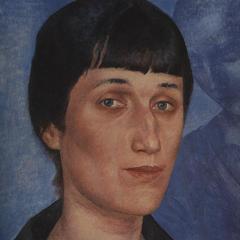
Anna Akhmatova
Anna Akhmatova

Anna Akhmatova (June 23, 1889 – March 5, 1966) was one of the most prominent Russian poets of the 20th century. Known for her profound emotions and exquisite artistic skills, she is often referred to as the 'nightingale of Russian poetry'. more

You May Also Like

“She had an awfully huge void to fill in your life all of a sudden, right from the beginning of her life. The nature of stress is not always the usual stuff that people think of. It's not the external stress of war or money loss or somebody dying, it is actually the internal stress of having to adjust oneself to somebody else. Cancer and ALS and MS and rheumatoid arthritis and all these other conditions, it seems to me, happen to people who have a poor sense of themselves as independent persons. On the emotional level, that is- they can be highly accomplished in the arts or intellectually- but on an emotional level they have a poorly differentiated sense of self. They live in reaction to others without ever really sensing who they themselves are.”

“Je cherche le caractère dans chaque matière. Or le caractère de la céramique de gris est le sentiment du grand feu, et cette figure [sculpture] calcinée dans cet enfer, en exprime je crois assez fortement le caractère. I look for the character of each medium. The character of stoneware is that of a very hot fire, and this figure [sculpture] that has been scorched in the ovens of hell is I think a strong expression of this character.”

“Stendhal knows the source of his greatest happiness and his worst misery: the reflexivity of his spiritual life. When he loves, enjoys beauty, feels free and unconstrained, he realizes not only the bliss of these feelings but, at the same time, the happiness of being aware of this happiness. But now that he ought to be completely absorbed by his happiness and feel redeemed from all his limitations and inadequacies, he is still full of problems and doubts: Is that the whole story?—he asks himself. Is that what they call love? Is it possible to love, to feel, to be delighted and yet to observe oneself so coolly and so calmly? Stendhal’s answer is by no means the usual one, which assumes the existence of an insurmountable gulf between feeling and reason, passion and reflexion, love and ambition, but is based on the assumption that modern man simply feels differently, is enraptured and enthusiastic differently from a contemporary of Racine or Rousseau. For them, spontaneity and reflexivity of the emotions were incompatible, for Stendhal and his heroes they are quite inseparable; none of their passions is so strong as the desire to be constantly calling themselves to account for what is going on inside them. Compared with the older literature, this self consciousness implies just as profound a change as Stendhal’s realism, and the overcoming of classical-romantic psychology is just as strictly one of the preconditions of his art as the abolition of the alternative between the romantic escape from the world and the anti-romantic belief in the world.”