Quotessence
Home / Quotes / Quote by Marshall Ganz

Quote by Marshall Ganz

“Charity asks, 'what's wrong, how can I help?' Justice asks, 'why is it happening and how can I change it?' And that's when people get uncomfortable. Because it is often the case that these people over here have less, because these people over here have more. And when we try to change that, there's resistance & there's conflict and struggle.”

Quote by Marshall Ganz

Author
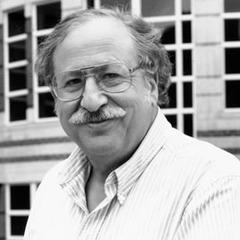
Marshall Ganz
Marshall Ganz

Marshall Ganz is an accomplished lecturer, born on March 14, 1943. He has extensive experience in public speaking and leadership training, serving as a consultant in various fields. more

You May Also Like

“...a study of all 50 U.S. States found that those states marked out by large inequalities of power in terms of income and ethnicity had weaker environmental policies and suffered greater ecological degradation. Furthermore, one study covering 50 countries found the more unequal a country is, the more likely the biodiversity of its landscape is to be under threat.”

“The vast majority of states continue to withhold the right to vote when prisoners are released on parole. Even after the term of punishment expires, some states deny the right to vote for a period ranging from a number of years to the rest of one’s life. This is far from the norm in other countries—like Germany, for instance, which allows (and even encourages) prisoners to vote. In fact, about half of European countries allow all incarcerated people to vote, while others disqualify only a small number of prisoners from the polls. Prisoners vote either in their correctional facilities or by some version of absentee ballot in their town of previous residence. Almost all of the countries that place some restrictions on voting in prison are in Eastern Europe, part of the former Communist. No other country in the world disenfranchises people who are released from prison in a manner even remotely resembling the United States. In fact, the United Nations Human Rights Committee has charged that U.S. disenfranchisement policies are discriminatory and violate international law.”

“What made you suspicious of this person?” “He seemed out of place.” “How do you mean?” “He didn’t fit the profile of a resident.” “Was he white or black?” Jones breaks eye contact and stares at the floor. “He was black, sir,” Jones says to the floor. “Thank you, Officer Jones. We’ll be in touch.”

“His fear may have been race-related. You’d have to ask him. To me, a law-abiding citizen is a law-abiding citizen, regardless of race. So yes, I believe the result would have been different had I been the officer. I don’t believe I’d have pulled this couple over in the first place.”