Quotessence
Home / Quotes / Quote by Witold Gombrowicz

Quote by Witold Gombrowicz

“(…) jest naiwnością mniemanie, jakoby zachwyt nasz wobec dzieła sztuki z nas samych pochodził: że zachwyt ten w sporej mierze nie rodzi się z ludzi, ale między ludźmi, i jest to tak jakbyśmy wzajemnie zmuszali się do zachwytu (choć nikt „osobiście” nie jest zachwycony). / It is naive to believe that the admiration for a masterpiece is spontaneous. The admiration, to a great extent, is not born within people but between people, as if we forced each other to admire (while no one is “personally” enraptured). (Dziennik, 1956, XX, Wtorek I)”

Quote by Witold Gombrowicz

Work

Dziennik 1953-1956

Browse quotes and source details for this work. more

Author

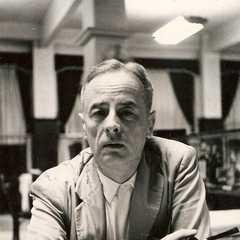
Witold Gombrowicz
Witold Gombrowicz

Witold Gombrowicz was a Polish novelist known for his unique literary style and profound psychological insights. His works often explore the relationship between individuals and society, as well as the complexities of human nature. Born on August 4, 1904, he passed away on July 24, 1969. more

You May Also Like

“No man can roan or inhabit the Canadian North without it affecting him, and the artist, because of his constant habit of awareness and his discipline in expression, is perhaps more understanding of its moods and spirit than others are. He is thus better equipped to interpret it to others, and then, when her has become one with its spirit, to create living works in their own right, by using forms, colors, rhythms and moods, to make a harmonious home for the imaginative and spiritual meaning it has evoked in him.”

“Because this law could mean so much or so little, it held potential for causing great mischief in the world of art and politics. We needed to reduce its uncertainty, and the best way to do that, I believed, was to force a court to interpret it, which would either void or narrow the law. To make it as broad a target as possible and to assure that someone would sue us, I reproduced the Helms amendment verbatim in the terms and conditions for grant recipients. It could not be ignored there, and if it was to be declared unconstitutional, it had to appear where the courts could not ignore it either.”

“In 2004, the Animals in War monument outside Hyde Park in London was created by the English sculptor David Backhouse. The monument includes two life-sized bronze mules carrying supplies, as well as statues of a horse and a dog and bas-relief carvings of other animals such as camels, elephants and birds who have been used in warfare. The inscription reads: *Animals in War. This monument is dedicated to all the animals that served and died alongside British and allied forces in wars and campaigns throughout time. They had no choice.* ~ John Sorenson”

“I know not why, but all the noblest arts hold in perfection but for a very little moment. They soon reach a height from which they begin to decline, and when they have begun to decline it is a pity that they cannot be knocked on the head; for an art is like a living organism - better dead than dying. There is no way of making an aged art young again; it must be born anew and grow up from infancy as a new thing, working out its own salvation from effort to effort in all fear and trembling.”