Quotessence
Home / Quotes / Quote by Virginia Woolf

Quote by Virginia Woolf

“The one she needed most kept aloof, for she was, to hear her talk, changing her selves as quickly as she drove - there was a new one at every corner - as happens when, for some unaccountable reason, the conscious self, which is the uppermost, and has the power to desire, wishes to be nothing but one self. This is what some people call the true self, and it is, they say, compact of all the selves we have it in us to be; commanded and locked up by the Captain self, the Key self, which amalgamates and controls them all”

Quote by Virginia Woolf

Book:Orlando

Work

Orlando

Orlando is a novel by Virginia Woolf that tells the story of a young nobleman who, after a mysterious transformation, lives as a woman for several centuries. The narrative spans from the Elizabethan era to the early 20th century, blending biography, fantasy, and satire. The book examines the fluidity of gender, the nature of artistic creation, and the passage of time, all while maintaining a playful and lyrical tone. It is considered a key work in modernist literature and a pioneering exploration of gender identity. more
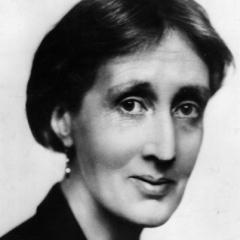
Author

Virginia Woolf
Virginia Woolf

British modernist writer, known for her unique narrative techniques and profound portrayal of female experience. Her works include 'To the Lighthouse' and 'Mrs. Dalloway'. more

You May Also Like

“In the sense, that is, that the author who created us alive no longer wished, or was no longer able, materially to put us into a work of art. And this was a real crime, sir; because he who has had the luck to be born a character can laugh even at death. He cannot die. The man, the writer, the instrument of the creation will die, but his creation does not die. And to live for ever, it does not need to have extraordinary gifts or to be able to work wonders.”

“Let us return to Benjamin Rush, who foresaw the revolutionary implications of Benjamin [Lay]'s philosophy. Writing after the abolitionist movement had burst into existence during the "age of revolution," Rush was acutely conscious that Benjamin had been a lonely fighter against slavery for forty long years, suffering endless persecution, ridicule, and repression, without a movement to support and sustain him. Rush saw that his very survival took rare strength, confidence, certitude, and character. He sought to turn the experience into an object lesson for activists of his own time. The "benefactors of mankind," he continued, must not "despair, if they do not see the fruits of their benevolent proportions, or undertakings, during their lives." Wherever the "seed of truth or virtue" is planted, it will "preserve and carry with it the principle of life." Some seeds bear fruit quickly, Rush explained, but the "most valuable of them, like the venerable oak, are centuries in the growing." Like the fearless Benjamin Lay, these giant oaks do not wither. "They exist and bloom for ever.”