Quotessence
Home / Quotes / Quote by Seyyed Hossein Nasr

Quote by Seyyed Hossein Nasr

“The ecological crisis is only an externalization of an inner malaise and cannot be solved without a spiritual rebirth of Western man […] It is still our hope that as the crisis created by man's forgetfulness of who he really is grows and that as the idols of his own making crumble one by one before his eyes, he will begin a true reform of himself, which always means a spiritual rebirth and through his rebirth attain a new harmony with the world of nature around him. Otherwise, it is hopeless to expect to live in harmony with that grand theophany which is virgin nature, while remaining oblivious and indifferent to the Source of that theophany both beyond nature and at the centre of man's being […] Few are willing to look reality in the face and accept the fact that there is no peace possible in human society as long as the attitude toward nature and the whole natural environment is one based on aggression and war. Furthermore, perhaps not all realize that in order to gain this peace with nature there must be peace with the spiritual order. To be at peace with the Earth one must be at peace with Heaven.”

Quote by Seyyed Hossein Nasr

Work

Man and Nature: The Spiritual Crisis in Modern Man

Browse quotes and source details for this work. more

Author
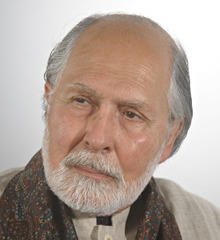
Seyyed Hossein Nasr
Seyyed Hossein Nasr

Seyyed Hossein Nasr is a distinguished Iranian philosopher, intellectual, and scholar of Islamic studies. Born on April 7, 1933, he has made significant contributions to the field of Islamic philosophy and comparative religion. His work emphasizes the importance of understanding Islamic thought in its historical and cultural context. more

You May Also Like

“Between the unenlightened human being and the Enlightened one, the Buddha, there are a number of intermediate degrees, embodied in different people at different stages of spiritual development. Most people are still short of Enlightenment, to a greater or lesser extent, but at the same time they are not wholly unenlightened. They stand somewhere between the unenlightened state and the state of full Enlightenment, and thus make up the spiritual hierarchy, the higher reaches of which can be referred to as the Bodhisattva hierarchy. By now we know enough about Bodhisattvas to have an appreciation of the intensity of their aspiration and commitment to the spiritual life. But even among Bodhisattvas there are degrees of spiritual attainment. The principle of spiritual hierarchy is very important.”

“A little knowledge is a dangerous thing. The great eleventh-century Nalanda pandit Lama Atisha understood this well, and with a mighty heart of wise compassion he set out to marshal the Buddha‘s eighty-four thousand teachings – found in hundreds of scriptures and thousands of verses – into a logical, sequential, and practical road map to help guide spiritual seekers on the path, from ordinariness to liberation on to full and final awakening. This unique style of teaching came to be called Lam Rim, or the Gradual Path to Enlightenment, and, attesting to its beauty and effectiveness, has been preserved in all lineages and schools of Tibetan Buddhism for the past thousand years. One of the unique features of the Lam Rim is that it recognizes an alternative to the path of sudden, spectacular enlightenment and instead proposes a more modest, gradual awakening. From the beginning of Tibet‘s history of receiving dharma transmission from India, with the great debates involving the eighth-century Indian scholar Kamalashila, it was clear that for the masses the gradual process of studying, contemplating, and embodying insights over the course of a sustained, lifelong practice would be most appropriate and beneficial. While all methods have their validity and are useful for practitioners of various dispositions, the gradual approach explained in these pages is as relevant to modern students as it was to Tibetans centuries ago. – Geshe Tenzin Zopa”

“Enlightenment is possible – for everyone. However, I don‘t think we will all awaken spontaneously in the way contemporary spiritual teachers Krishnamurti or Eckhart Tolle did. Most of us will never experience a voice from on high, a flash of life-altering insight, stigmata, or a transcendent miracle. Anything is possible, but the odds are not in our favor. What these teachers experienced is like winning the lottery. Yet, from the Buddhist perspective, most of us have already won the lottery: against all probability, we have been born as human beings with intact senses and a bit of interest in pursuing something spiritual. This is even more remarkable when we consider the obstacles and temptations of our materialistic culture, in which spirit is thrown out with the bathwater of religious dogma, God is proclaimed dead, consciousness is reduced to epiphenomena of the brain, and life‘s purpose is made a hedonic scramble on a treadmill to nowhere. What is far more likely than sudden enlightenment is gradual awakening. Following a systematic educational process like a college curriculum, gradual awakening builds on incremental insights into who we truly are, learning to care for ourselves and others, and discovering creative ways to engage the problems we all face. This gradual process of awakening doesn‘t offer an escape hatch to another realm of reality or disavow our human wounds, limits, and foibles in this realm; rather it embraces and transforms them, because the only way out is through.”

“Here‘s the good news: our brains are flexible and designed for learning and adaptation in a phenomenon known as neuroplasticity, so we can reprogram at any time in the life span and make genuine, radical changes. With the right tools, a human being can travel the Lam Rim (the Stages of the Path to Enlightenment), from ordinary neurotic to extraordinary hero . . . all the way to a Buddha. (p. 77)”

“Remember that awakening, freedom from suffering, salvation, if you will, liberation, omniscience, buddhahood, all come from your own understanding, your insight into your own reality [...] The highest meaning of Dharma is the reality that is our own reality – the reality that holds us in freedom from suffering, holds us in a state of bliss. Dharma is our own reality that we seek to understand fully, to open to fully. Dharma, therefore, also consists of those methods and the teaching of those methods that are the art and sciences that enable us to open ourselves [...] Ultimately, we take refuge in reality itself, because that is the only secure refuge. If we took refuge in any unrealistic thing, it could be blown down by this-and-that howling wind - but when we take refuge in reality, that is what endures. It is uncreated. It is not made by anyone. It lasts. It is there, and therefore it can give refuge.”

“We can sacrifice ourselves in order to save lives, to spread messages of freedom, hope, and dignity. That is our Buddha Nature, our Christ Nature – people who have embodied the principles of love and compassion and have taken extraordinary measures to change the world for the better. We call them heroes and heroines - for example, Gandhi, Martin Luther King Jr., Nelson Mandela, and Malala Yousafzai, along with the nameless aid workers, neonatal surgeons, and ordinary parents who make extraordinary choices in life-threatening circumstances. And we admire them. Those are the people who we want to occupy our Jewel Tree, letting their nectar rain down upon us in a shower of blessing and inspiration. They are the people who have discovered interdependence, wisdom, and compassion, have seen through the illusion of separation and come out the other side with the hero‘s elixir for the welfare of others. If we don‘t believe we can do it, if we don‘t have the confidence, that‘s the last hurdle. We believe there is something special about the hero and something deficient about us, but the only difference is that the Bodhisattva has training, has walked the Lam Rim, has reached the various milestones that each contemplation is designed to evoke, and collectively those experiences have brought confidence. Our natures are the same. It‘s in your DNA to become a hero. As heretical as it may sound to some, there is no inherent specialness to His Holiness the Dalai Lama. He is not inherently different from you. If you had his modeling, training, support, and devotional refuge, you too could be a paragon of hope and goodwill. Now, hopefully you will recognize cow critical it is for you to embrace your training (the Bodhisattva Path), so that we can shape-shift civilization through the neural circuitry of living beings. (pp. 139 - 140)”