Quotessence
Home / Quotes / Quote by Robin Wall Kimmerer

Quote by Robin Wall Kimmerer

Work

Author

Robin Wall Kimmerer
Robin Wall Kimmerer

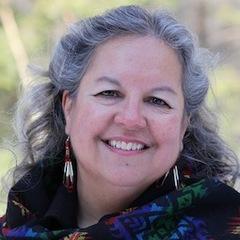
Robin Wall Kimmerer is an American author, ecologist, and indigenous plant scientist. Born in 1953, she is a member of the Hénan-Hénatsi tribe and an active advocate for environmental protection. Her work blends science, literature, and indigenous knowledge, exploring the relationship between humans and nature. more

You May Also Like

“Last night I walked for hours. It was as if I wanted to get lost down some unknown street. To get absolutely and happily lost. But there are moments when we can’t, when we don’t know how to lose our way. Even if we always go in the wrong direction. Even if we lose all our points of reference. Even if it begins to grow late and we feel the weight of morning as we advance. There are times when no matter how we try to find out what we don’t know, we can’t lose our way. And perhaps we long for the time when we could be lost. The time when all the streets were new.”

“I’ve heard that when you’re in a life-or-death situation, like a car accident or a gunfight, all your senses shoot up to almost superhuman level, everything slows down, and you’re hyper-aware of what’s happening around you. As the shuttle careens toward the earth, the exact opposite is true for me. Everything silences, even the screams and shouts from the people on the other side of the metal door, the crashes that I pray aren’t bodies, the hissing of rockets, Elder’s cursing, my pounding heartbeat. I feel nothing—not the seat belt biting into my flesh, not my clenching jaw, nothing. My whole body is numb. Scent and taste disappear. The only thing about my body that works is my eyes,and they are filled with the image before them. The ground seems to leap up at us as we hurtle toward it. Through the blurry image of the world below us, I see the outline of land—a continent. And at once, my heart lurches with the desire to know this world, to make it our home. My eyes drink up the image of the planet—and my stomach sinks with the knowledge that this is a coastline I’ve never seen before. I could spin a globe of Earth around and still be able to recognize the way Spain and Portugal reach into the Atlantic, the curve of the Gulf of Mexico, the pointy end of India. But this continent—it dips and curves in ways I don’t recognize, swirls into an unknown sea, creating peninsulas in shapes I do not know, scattering out islands in a pattern I cannot connect. And it’s not until I see this that I realize: this world may one day become our home,but it will never be the home I left behind.”