Quotessence
Home / Quotes / Quote by Michel Faber

Quote by Michel Faber

Work

The Crimson Petal and the White

Browse quotes and source details for this work. more

Author
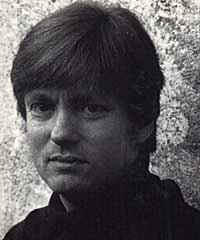
Michel Faber
Michel Faber

Michel Faber is a British writer known for his unique literary style and profound thematic explorations. His works span various genres, including novels, poetry, and plays. Faber's representative work, 'The Book of Strange New Things', is a science fiction novel that delves into religious faith, human exploration, and the mysteries of the universe. more

You May Also Like

“Between the banks of pain and pleasure the river of life flows. It is only when the mind refuses to flow with life, and gets stuck at the banks, that it becomes a problem. By flowing with life I mean acceptance -- letting come what comes and go what goes. Desire not, fear not, observe the actual, as and when it happens, for you are not what happens, you are to whom it happens. Ultimately even the observer you are not. You are the ultimate potentiality of which the all-embracing consciousness is the manifestation and expression.”

“I like you so much, Marianne said. Connell felt a pleasurable sorrow come over him, which brought him close to tears. Moments of emotional pain arrived like this, meaningless or at least indecipherable. Marianne lived a drastically free life, he could see that. He was trapped by various considerations. He cared what people thought of him. He even cared what Marianne thought, that was obvious now.”

“This omnipresent cult of the body is extraordinary. It is the only object on which everyone is made to concentrate, not as a source of pleasure, but as an object of frantic concern, in the obsessive fear of failure or substandard performance, a sign and an anticipation of death, that death to which no one can any longer give a meaning, but which everyone knows has at all times to be prevented. The body is cherished in the perverse certainty of its uselessness, in the total certainty of its non-resurrection. Now, pleasure is an effect of the resurrection of the body, by which it exceeds that hormonal, vascular and dietetic equilibrium in which we seek to imprison it, that exorcism by fitness and hygiene. So the body has to be made to forget pleasure as present grace, to forget its possible metamorphosis into other forms of appearance and become dedicated to the utopian preservation of a youth that is, in any case, already lost. For the body which doubts its own existence is already half-dead, and the current semi-yogic, semi-ecstatic cult of the body is a morbid preoccupation. The care taken of the body while it is alive prefigures the way it will be made up in the funeral home.”