Quotessence
Home / Quotes / Quote by Barbara Jordan

Quote by Barbara Jordan

“We believe in equality for all, and privileges for none. This is a belief that each American regardless of background has equal standing in the public forum, all of us. Because we believe this idea so firmly, we are an inclusive, rather than an exclusive party. Let everybody come.”

Quote by Barbara Jordan

Work

We Rise: Speeches by Inspirational Black Women

Browse quotes and source details for this work. more

Author
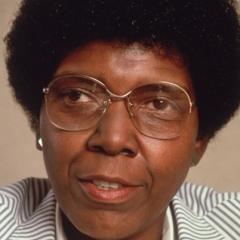
Barbara Jordan
Barbara Jordan

Barbara Jordan was a prominent American politician known for her influential career as a lawyer and a member of the United States House of Representatives. Born on February 21, 1936, she served as a member of the Texas House of Representatives and later as a U.S. Representative from Texas. Jordan was the first African American woman to serve in the Texas Senate and the first African American woman elected to Congress from the South. She was known for her eloquence and her advocacy for civil rights and social justice. more

You May Also Like

“All the Democrats who voted for him [Clarence Thomas] were from the South, the opposite of what had happened in 1967, when Southern Democratic senators opposed [Thurgood] Marshall. By 1991, blacks had become a core constituency of Southern senators, and Democrats feared alienating them with a vote against Thomas.”

“Supreme Court Justice Hugo Black, another powerful Democratic leader, was known as a defender of civil rights during his three decades on the Supreme Court. But what many do not know is that Justice Black was a prominent and secretive member of the KKK. He supposedly resigned membership in 1925, but it was later discovered that he was subsequently welcomed back into the Klan and given a lifetime membership.”

“The final major area of untapped power for the Negro is in the political arena. Negro population is burgeoning in major cities as tides of migrants flow into them in search of employment and opportunity. These new migrants have substantially higher birth rates than characterize the white population. The two trends, along with the exodus of the white population to the suburbs, are producing fast-gathering Negro majorities in the large cities. The changing composition of the cities must be seen in the light of their political significance. Particularly in the North, the large cities substantially determine the political destiny of the state. These states, in turn, hold the dominating electoral votes in presidential contests. The future of the Democratic Party, which rests so heavily on its coalition of urban minorities, cannot be assessed without taking into account which way the Negro vote turns. The wistful hopes of the Republican Party for large city influence will also be decided not in the boardrooms of great corporations but in the teeming ghettos. Its 1964 disaster with Goldwater, in which fewer than 6 percent of Negroes voted Republican, indicates that the illustrious ghost of Abraham Lincoln is not sufficient for winning Negro confidence, not so long as the party fails to shrink the influence of its ultra-right wing.”

“The Civil War was only one hundred years in the past at the time the Civil Rights Act passed, and during that interregnum, the white South had been trying to balance its top domestic priority - the enforcement of white supremacy - with its forced membership in the broader United States. The southern Democratic Party was the vehicle through which the white South negotiated that tension. Put simply, the southern Democratic Party was an authoritarian institution that ruled autocratically in the South and that protected its autonomy by entering into a governing coalition with the national Democratic Party. The Dixiecrats gave the national Democrats the votes they needed to control Congress, and the national Democrats let the Dixiecrats enforce segregation and one-party rule at home. The Dixiecrat-Democrat pact is a powerful reminder that there are worse things than polarization, that what's now remembered as a golden age in American politics was purchased at a terrible cost.”