Quotessence
Home / Quotes / Quote by Stendhal

Quote by Stendhal

Work

The Charterhouse of Parma

This novel is a complex and intricate tale that delves into the lives of characters involved in the tumultuous political climate of 19th-century Italy. It is renowned for its detailed portrayal of the era's societal and political dynamics, as well as its exploration of themes such as honor, betrayal, and the struggle for power. more

Author
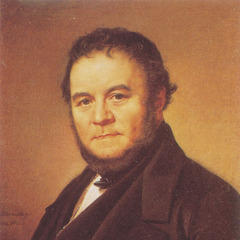
Stendhal
Stendhal

Stendhal, born Marie-Henri Beyle, was a prominent 19th-century French novelist and literary critic. Known for his profound psychological portrayals and unique narrative style, his works include masterpieces such as 'The Red and the Black' and 'The Charterhouse of Parma'. Stendhal was born on January 23, 1783, and died on March 23, 1842. more

You May Also Like

“Tahtın üzerine ya da yakınına doğan zeki insanlar, kısa sürede incelikli düşünme yetilerini yitirirler; çevrelerinde, kabalık olarak gördükleri konuşma özgürlüğünü yasaklarlar; yalnızca birtakım maskeler görmek isterler ve insanları tenlerinin güzelliğine bakarak yargılamaya kalkarlar; işin hoş yanı, sezgilerinin çok ince olduğuna inanmalarıdır.”

“So often have I studied the views of Florence, that I was familiar with the city before I ever set foot within its walls; I found that I could thread my way through the streets without a guide. Turning to the left I passed before a bookseller's shop, where I bought a couple of descriptive surveys of the city (guide). Twice only was I forced to inquire my way of passers by, who answered me with politeness which was wholly French and with a most singular accent; and at last I found myself before the facade of Santa Croce. Within, upon the right of the doorway, rises the tomb of Michelangelo; lo! There stands Canova's effigy of Alfieri; I needed no cicerone to recognise the features of the great Italian writer. Further still, I discovered the tomb of Machiavelli; while facing Michelangelo lies Galileo. What a race of men! And to these already named, Tuscany might further add Dante, Boccaccio and Petrarch. What a fantastic gathering! The tide of emotion which overwhelmed me flowed so deep that it scarce was to be distinguished from religious awe. The mystic dimness which filled the church, its plain, timbered roof, its unfinished facade – all these things spoke volumes to my soul. Ah! Could I but forget...! A Friar moved silently towards me; and I, in the place of that sense of revulsion all but bordering on physical horror which usually possesses me in such circumstances, discovered in my heart a feeling which was almost friendship. Was not he likewise a Friar, Fra Bartolomeo di San Marco, that great painter who invented the art of chiaroscuro, and showed it to Raphael, and was the forefather of Correggio? I spoke to my tonsured acquaintance, and found in him an exquisite degree of politeness. Indeed, he was delighted to meet a Frenchman. I begged him to unlock for me the chapel in the north-east corner of the church, where are preserved the frescoes of Volterrano. He introduced me to the place, then left me to my own devices. There, seated upon the step of a folds tool, with my head thrown back to rest upon the desk, so that I might let my gaze dwell on the ceiling, I underwent, through the medium of Volterrano's Sybills, the profoundest experience of ecstasy that, as far as I am aware, I ever encountered through the painter's art. My soul, affected by the very notion of being in Florence, and by proximity of those great men whose tombs I had just beheld, was already in a state of trance. Absorbed in the contemplation of sublime beauty, I could perceive its very essence close at hand; I could, as it were, feel the stuff of it beneath my fingertips. I had attained to that supreme degree of sensibility where the divine intimations of art merge with the impassioned sensuality of emotion. As I emerged from the porch of Santa Croce, I was seized with a fierce palpitations of the heart (that same symptom which, in Berlin, is referred to as an attack of nerves); the well-spring of life was dried up within me, and I walked in constant fear of falling to the ground. I sat down on one of the benches which line the piazza di Santa Croce; in my wallet, I discovered the following lines by Ugo Foscolo, which I re-read now with a great surge of pleasure; I could find no fault with such poetry; I desperately needed to hear the voice of a friend who shared my own emotion (…)”

“Segala hal yang dikatakan Komandan mengenai Orde adalah kebenaran yang tidak dilebih-lebihkan. Orde memang bersinonim dengan kebaikan. Orde menghargai kemajuan. Orde mencintai kehidupan. Orde bahkan mengajarkan pertobatan. Semua yang dijabarkan di dalam Kitab pada dasarnya akan berakhir pada kebahagiaan, pun setelah kematian. Akan tetapi Orde dan Kitab adalah takdir. Yang tidak dapat dibantah dan harus diterima semua orang dengan pasrah. Sama seperti penglihatanku, Orde tidak memberikan pilihan.”

“Stendhal, desde infância, amou as mulheres sensualmente; projetou nelas as aspirações de sua adolescência; imaginava-se de bom grado salvando de algum perigo uma bela desconhecida e conquistando-lhe o amor. Chegando a Paris, o que desejava mais ardentemente era "uma mulher encantadora; nós nos adoraremos, ela conhecerá minha alma"... Velho, escreve na poeira as iniciais das mulheres que mais amou. "Creio que foi o devaneio que preferi a tudo", confia-nos ele. E são imagens de mulheres que lhe alimentaram os sonhos; a lembrança delas anima as paisagens. "A linha de rochedos aproximando-se de Arbois, creio, e vindo de Dôle pela estrada principal, foi para mim uma imagem sensível e evidente da alma de Métilde." A música, a pintura, a arquitetura, tudo o que amou, amou-o com uma alma de amante infeliz; quando passeia em Roma, a cada página, uma mulher aparece; nas saudades, nos desejos, nas tristezas, nas alegrias que elas suscitaram-lhe, conheceu o gosto do próprio coração; a elas é que deseja como juizes. Freqüenta-lhes os salões, procura mostrar-se brilhante aos seus olhos, deveu-lhes suas maiores felicidades, suas penas; foram sua principal ocupação. Prefere seu amor a toda amizade e sua amizade à dos homens; mulheres inspiram seus livros, figuras de mulheres os povoam; é em grande parte para elas que escreve. "Corro o risco de ser lido em 1900 pelas almas que amo, as Mme Roland, as Mélanie Guibert..." As mulheres foram a própria subsistência de sua vida. De onde lhe veio esse privilégio? Esse terno amigo das mulheres, e precisamente porque as ama em sua verdade, não crê no mistério feminino; nenhuma essência define de uma vez por todas a mulher; a idéia de um "eterno feminino" parece-lhe pedante e ridículo. "Pedantes repetem há dois mil anos que as mulheres têm o espírito mais vivo e os homens, mais solidez; que as mulheres têm mais delicadeza nas idéias e os homens, maior capacidade de atenção. Um basbaque de Paris que passeava outrora pelos jardins de Versalhes concluía, do que via, que as árvores nascem podadas." As diferenças que se observam entre os homens e as mulheres refletem as de sua situação. Por exemplo, por que não seriam as mulheres mais romanescas do que seus amantes? "Uma mulher com seu bastidor de bordar, trabalho insípido que só ocupa as mãos, pensa no amante, enquanto este galopando no campo com seu esquadrão é preso se faz um movimento em falso." Acusam igualmente as mulheres de carecerem de bom senso. "As mulheres preferem as emoções à razão; é muito simples: como em virtude de nossos costumes vulgares elas não são encarregadas de nenhum negócio na família, a razão nunca lhes ê útil.. . Encarregai vossa mulher de tratar de vossos interesses com os arrendatários de duas de vossas propriedades; aposto que as contas serão mais bem feitas do que por vós." Se a História revela-nos tão pequeno número de gênios femininos é porque a sociedade as priva de quaisquer meios de expressão: "Todos os gênios que nascem mulheres estão perdidos para a felicidade do público; desde que o acaso lhes dê os meios de se revelarem, vós as vereís desenvolver os mais difíceis talentos." O pior handicap que devem suportar é a educação com que as embrutecem; o opressor esforça-se sempre por diminuir os que oprime; é propositadamente que o homem recusa às mulheres quaisquer possibilidades. "Deixemos ociosas nelas as qualidades mais brilhantes e mais ricas de felicidade para elas mesmas e para nós." Aos dez anos, a menina é mais fina e viva do que seu irmão; com vinte, o moleque é homem de espírito e a moça "uma grande idiota desajeitada, tímida e com medo de urna aranha"; o erro está na formação que teve. Fora necessário dar à mulher exatamente a mesma instrução que se dá aos rapazes.”