“For so it had come about, as indeed I and many men might have foreseen had not terror and disaster blinded our minds. These germs of disease have taken toll of humanity since the beginning of things—taken toll of our prehuman ancestors since life began here. But by virtue of this natural selection of our kind we have developed resisting power; to no germs do we succumb without a struggle, and to many—those that cause putrefaction in dead matter, for instance—our living frames are altogether immune. But there are no bacteria in Mars, and directly these invaders arrived, directly they drank and fed, our microscopic allies began to work their overthrow. Already when I watched them they were irrevocably doomed, dying and rotting even as they went to and fro. It was inevitable. By the toll of a billion deaths man has bought his birthright of the earth, and it is his against all comers; it would still be his were the Martians ten times as mighty as they are. For neither do men live nor die in vain.”
Quote by H. G. Wells
Work
H.G. Wells's The War of the Worlds is a seminal work in the genre of science fiction, detailing the arrival and subsequent conflict between humans and an alien race. The novel is renowned for its depiction of the panic and chaos that would ensue in the face of an extraterrestrial threat, and its exploration of themes such as fear, technology, and the unknown. more
Author
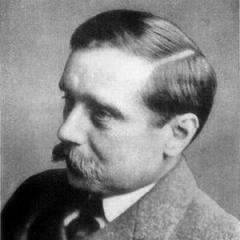
H.G. Wells was a prominent English writer known for his science fiction, history, and social commentary. His most famous works include 'The Time Machine,' 'The War of the Worlds,' and 'The Invisible Man.' Born on September 21, 1866, in Bromley, Kent, England, Wells passed away on August 13, 1946. more
You May Also Like
“When technology dictates every move, the most dangerous weapon is independent thought.”
“There's nothing like a trip to the Yeerk pool to make you appreciate life and freedom.”