Quotessence
Home / Quotes / Quote by Ludwig Feuerbach

Quote by Ludwig Feuerbach

“[T]he contradiction in Catholicism, that at the same time marriage is holy and celibacy is holy. This simply realises as a practical contradiction, the dogmatic contradiction of the Virgin Mother. … [T]his wondrous union of virginity and maternity, contradicting Nature and reason, but in the highest degree accordant with the feelings and imagination, … The supranatural conception of Christ is a fundamental doctrine of Christianity, … As death [was] repugnant to the Christians, and … set aside by them through the supposed agency of miraculous power; so, necessarily, they had an equal repugnance to the natural processes of generation, and superseded it by miracle. The Miraculous Conception is not less welcome than the Resurrection to all believers; for it was the first step towards the purification of mankind, polluted by sin and Nature.”

Quote by Ludwig Feuerbach

Work

Essence of Christianity

Browse quotes and source details for this work. more

Author
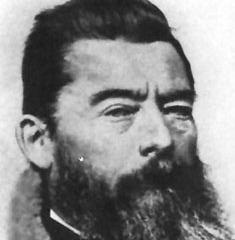
Ludwig Feuerbach
Ludwig Feuerbach

Ludwig Feuerbach, a prominent German philosopher born on July 28, 1804, and died on September 13, 1872. He was a significant figure in the German classical philosophy and had a profound impact on the birth of Marxist philosophy. more

You May Also Like

“God as an object of thought … is always a remote being; the relation … is an abstract one, … So long as we have not met a being face to face, we are always in doubt whether he is really such as we imagine him; … Christ … is the … certainty that God is what the soul desires and needs him to be. … [O]nly in Christ is the last wish of religion realised, … [W]hat god is in essence, … Christ is in actual appearance.”

“The salvation of the soul is the fundamental idea, the main point in Christianity; … this salvation lies only in God … But God is absolute subjectivity, … separated from the world, … set free from matter, severed from … life … and … from the distinction of sex. Separation from the world, from matter, from the life of the species, is therefore the ultimate aim of Christianity. … [T]his aim had its visible, practical realisation in Monachism.”

“The true Christian not only feels no need of culture, because this is a worldly principle and opposed to feeling; he also has no need of (natural) love. … God supplies to him the want of love, of a wife, of a family. … [T]he man who does not deny his manhood, is conscious that he is only part of a being, which needs another part for the making up of the whole of true humanity. The Christian, on the contrary, in his excessive, transcendental subjectivity, conceives that he is, by himself, a perfect being. But the sexual instinct runs counter to this view; it is in contradiction with his ideal: the Christian must therefore deny this instinct.”

“[M]arriage is not holy in Christianity; … an unholy thing … excluded from heaven. … Where his heaven is, there is his heart, - heaven is his heart laid open. Heaven is nothing but the idea of the true, the good, the valid, - of that which ought to be; earth, nothing but the idea of the untrue, the unlawful, of that which ought not to be. … [T]here [in heaven] dwell only pure sexless individuals: … the Christian excludes the life of the species from his conception of the true life[.]”

“The future life is the feeling, the conception of freedom from those limits which here circumscribe the feeling of self, the existence of the individual. … The natural man remains at home because he finds it agreeable, because he is perfectly satisfied; religion … commences with a discontent, a disunion, forsakes its home and travels far, but only to feel … more vividly in the distance … home. In religion man separates himself from himself, but only to return always to the same point from which he set out [himself]. Man negatives himself, but only to posit himself again, and that in a glorified form: he negatives this life, but only, in the end, to posit it again in the future life.”