Quotessence
Home / Quotes / Quote by Peter Robinson

Quote by Peter Robinson

“But he couldn't feel self-pity in the face of the memorial. He hadn't lost nearly enough as these children, who'd lost their homeland and, in many cases,their whole families. Perhaps they had gained something, too, though. They had at least escaped the concentration camps, been taken in by good, caring families, and had grown up to live their lives in relative freedom.”

Quote by Peter Robinson

Work

Strange Affair

Browse quotes and source details for this work. more

Author

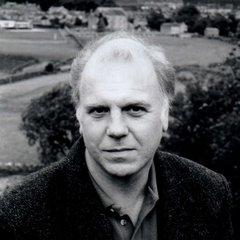
Peter Robinson
Peter Robinson

Peter Robinson is a renowned crime writer known for his intricate psychological portrayals and gripping plots. Born on March 17, 1950, he has published numerous critically acclaimed crime novels since his debut in 1987. more

You May Also Like

“Imagine for a moment that we are nothing but the product of billions of years of molecules coming together and ratcheting up through natural selection, that we are composed only of highways of fluids and chemicals sliding along roadways within billions of dancing cells, that trillions of synaptic conversations hum in parallel, that this vast egglike fabric of micron-thin circuitry runs algorithms undreamt of in modern science, and that these neural programs give rise to our decision making, loves, desires, fears, and aspirations. To me, that understanding would be a numinous experience, better than anything ever proposed in anyone's holy text.”

“Although a handful of progressive individuals favoured independence from Spain, Cuba's economic elite was conservative, fearful of the economic and social consequences of a break with the colonial motherland. Without Spanish support, the planters would not be able to sustain the slave system on which their economic power was based, nor would they be strong enough to crush slave revolts”

“What if I make it through this, so damaged that the rest of my life is a living hell? A graphic rerun of everything I survived, but over and over and over again?” She inhaled a shuddering breath. “So every single detail—that was already burned into my brain and every inch of my body—gets worked in like oil on a cutting board!” Tears dribbled down her face. “But I’m not a cutting board, Dakota, and what I went through in British Columbia was not oil to be worked in,” she whispered. “It was worse than dying, and I’m afraid that living after this will be a worse punishment than I ever imagined.” She shrugged one shoulder. “And I don’t think I’m up to the task.”

“Who are these girls? Where do they come from? How do they end up on the street? Outsiders- and that includes most police officers, judges, the general public, and politicians- mistakenly believe that if these girls don't like what they are doing they can just walk away. What a growing number of dedicated cops and community activists began to realize is that the illusion of choice is the biggest obstacle to getting people to see these girls as the victims they are. "In order to have a choice you need to have two viable options to choose from," says DIGNITY's Kathleen Mitchell. "The choice for these girls is not 'Do you want to turn a trick or do you want a wonderful life?' That's not even on the table." Most girls on the tracks are running from something worse they faced at home. In survey after survey, in one city after another, statistics show that prostituted children suffer prior abuse as a staggeringly high rate.”