Quotessence
Home / Quotes / Quote by John Steinbeck

Quote by John Steinbeck

“... he learned that when people are very poor they still have something to give and the impulse to give it. He developed a love for poor people he could not have conceived if he had not been poor himself.”

Quote by John Steinbeck

Work

East of Eden

John Steinbeck's 'East of Eden' is a profound and complex narrative that delves into the lives of the Joad family as they navigate the challenges of their time. The story is rich with symbolism and philosophical musings, offering a rich tapestry of human emotions and societal struggles. more
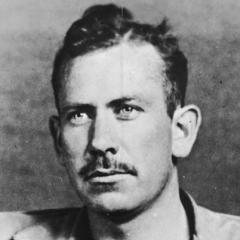
Author

John Steinbeck
John Steinbeck

John Steinbeck was an American author renowned for his profound depiction of American society and the lives of farmers. His works often explore themes of poverty, social injustice, and human nature. Steinbeck was awarded the Nobel Prize in Literature in 1962 for his significant contribution to American literature. more

You May Also Like

“Let any one who is acquainted with what multitudes of people get their daily bread in this city by their labour, whether artificers or meer workmen—I say, let any man consider what must be the miserable condition of this town if, on a sudden, they should all be turned out of employment, that labour should cease, and wages for work be no more. This was the case with us at that time; and had not the sums of money contributed in charity by well-disposed people of every kind, as well as abroad as at home, been prodigiously great, it had not been in the power of the Lord Mayor and sheriffs to have kept the publick peace. Nor were they without apprehensions, as it was, that desperation should push the people upon tumults and cause them to rifle the houses of rich men and plunder the markets of provisions; in which case the country people, who brought provisions very freely and boldly to town, would have been terrified from coming any more, and the town would have sunk under an unavoidable famine.”

“Sometimes the things that are felt the most are expressed between two souls over the distance and over time...where no words abide. And others may speak freely, live with one another freely, express themselves freely– just like everyone else, but then there is you... you have no words for proof of reassurance, no tokens of professed love, but you have something. Something worth keeping.”

“It must be confessed that though the plague was chiefly among the poor, yet were the poor the most venturous and fearless of it, and went about their employment with a sort of brutal courage; I must call it so, for it was founded neither on religion or prudence; scarce did they use any caution, but run into any business which they could get employment in, though it was the most hazardous. Such was that of tending the sick, watching houses shut up, carrying infected persons to the pest-house, and, which was still worse, carrying the dead away to their graves.”