Quotessence
Home / Quotes / Quote by Annie Ernaux

Quote by Annie Ernaux

“It seems to her that her education is more than just a way to escape poverty. It is a weapon of choice against stagnation in a kind of feminine condition that arouses her pity, the tendency to lose oneself in a man, which she has experienced, and of which she is ashamed. She feels no desire to marry or have children. Mothering and the life of the mind seem incompatible. In any case, she'd be sure to be a bad mother. Her ideal is the union libre in the poem by Andre Breton.”

Quote by Annie Ernaux

Work

The Years

This book is a reflective narrative that delves into the personal and societal changes experienced by its characters over the course of many years, offering a rich tapestry of human experience and the evolution of society. more

Author

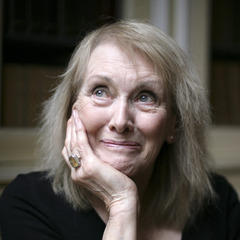
Annie Ernaux
Annie Ernaux

Annie Ernaux, born on September 1, 1940, is a renowned French writer known for her autobiographical novels. Her works delve into the relationship between personal memory and history, as well as the impact of social class on individual destiny. more

You May Also Like

“How skillful to tax the middle class to pay for the relief of the poor, building resentment on top of humiliation! How adroit to bus poor black youngsters into poor white neighborhoods, in a violent exchange of impoverished schools, while the schools of the rich remain untouched and the wealth of the nation, doled out carefully where children need free milk, is drained for billion-dollar aircraft carriers. How ingenious to meet the demands of blacks and women for equality by giving them small special benefits, and setting them in competition with everyone else for jobs made scares by an irrational, wasteful system. How wise to turn the fear and anger of the majority toward a class of criminals bred - by economic inequity - faster than they can be put away, deflecting attention from the huge thefts of national resources carried out within the law by men in executive offices.”

“Great revelations of nature, of course, never fail to impress in one way or another, and I was no stranger to moods of the kind. Mountains overawe and oceans terrify, while the mystery of great forests exercises a spell peculiarly its own. But all these, at one point or another, somewhere link on intimately with human life and human experience. They stir comprehensible, even if alarming, emotions. They tend on the whole to exalt.”

“Magyarország a képzelet országa. Kitaláljuk magunknak az országot, függetlenül a reálisan létezőtől. Futballország volnánk, de sose nyertünk világbajnokságot; olvasom, hogy irodalmi nagyhatalom volnánk, és a kutya sem ismeri a világban az irodalmunkat, itt a két világháború közt úgy volt királyság, hogy király nem volt hozzá. A káprázat országa.”