Quotessence
Home / Quotes / Quote by Jack London

Quote by Jack London

“Life is not always a matter of holding good cards, but sometimes, playing a poor hand well.”

Quote by Jack London

Author
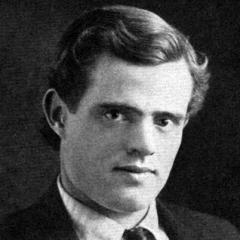
Jack London
Jack London

Jack London was an American author known for his adventure novels and realistic works. His writings often depicted the lives of the underclass and his profound insights into the natural world. His notable works include 'The Call of the Wild' and 'White Fang'. more

You May Also Like

“All serious poker players try to minimize their tells, obviously. There are a couple ways to go about this. One is the robotic approch: where your face becomes a mask and your voice a monotone, at least while the hand is being played. . . . The other is the manic method, where you affect a whole bunch of tics, twitches, and expressions, and mix them up with a river of insane babble. The idea is to overwhelm your opponents with clues, so they can't sort out what's going on. This approach can be effective, but for normal people it's hard to pull off. (If you've spent part of your life in an institution, this method may come naturally.)”

“Being solemn has almost nothing to do with being serious, but on the other hand, you can't go on being adolescent forever, unless you are in the performing arts, and anyhow most people can't tell the difference. In fact, though Americans talk a great deal about the virtue of being serious, they generally prefer people who are solemn over people who are serious. In politics, the rare candidate who is serious is easily overwhelmed by one who is solemn. This is probably because it is hard for most people to recognize seriousness, which is rare, especially in politics, but comfortable to endorse solemnity, which is as commonplace as jogging. Jogging is solemn. Poker is serious. Once you grasp that distinction, you are on your way to enlightenment.”

“Poker is a fun game, but it is just a game. It is a game of some information, not total information. It is a game of some luck, but not total luck. It is a game of some skill, but not total skill. It is a game of hustling that doesn't always reward the hustler. It is a card game that steals from the artists to give to the scientists who then get robbed by the hustlers, before they give it back to the artists again. It is hilariously broken. You will die 500 years before your luck catches up to you. No game contains your redemption, so look not for it here. It is beautiful because it is so meaningless.”

“Indeed, a quick glance around this broken world makes it painfully obvious that we don't need more arguments on behalf of God; we need more people who live as if they are in covenant with Unconditional Love, which is our best definition of God. (p. 21)”

“thepsychchic chips clips ii If you think of yourself instead as an almost-victor who thought correctly and did everything possible but was foiled by crap variance? No matter: you will have other opportunities, and if you keep thinking correctly, eventually it will even out. These are the seeds of resilience, of being able to overcome the bad beats that you can’t avoid and mentally position yourself to be prepared for the next time. People share things with you: if you’ve lost your job, your social network thinks of you when new jobs come up; if you’re recently divorced or separated or bereaved, and someone single who may be a good match pops up, you’re top of mind. This attitude is what I think of as a luck amplifier. … you will feel a whole lot happier … and your ready mindset will prepare you for the change in variance that will come … 134-135 W. H. Auden: “Choice of attention—to pay attention to this and ignore that—is to the inner life what choice of action is to the outer. In both cases man is responsible for his choice and must accept the consequences.” Pay attention, or accept the consequences of your failure. 142 Attention is a powerful mitigator to overconfidence: it forces you to constantly reevaluate your knowledge and your game plan, lest you become too tied to a certain course of action. And if you lose? Well, it allows you to admit when it’s actually your fault and not a bad beat. 147 Following up on Phil Galfond’s suggestion to be both a detective and a storyteller and figure out “what your opponent’s actions mean, and sometimes what they don’t mean.” [Like the dog that didn’t bark in the Sherlock Holmes “Silver Blaze” story.] 159 You don’t have to have studied the description-experience gap to understand, if you’re truly expert at something, that you need experience to balance out the descriptions. Otherwise, you’re left with the illusion of knowledge—knowledge without substance. You’re an armchair philosopher who thinks that just because she read an article about something she is a sudden expert. (David Dunning, a psychologist at the University of Michigan most famous for being one half of the Dunning-Kruger effect—the more incompetent you are, the less you’re aware of your incompetence—has found that people go quickly from being circumspect beginners, who are perfectly aware of their limitations, to “unconscious incompetents,” people who no longer realize how much they don’t know and instead fancy themselves quite proficient.) 161-162 Erik: Generally, the people who cash the most are actually losing players (Nassim Taleb’s Black Swan strategy, jp). You can’t be a winning player by min cashing. 190 The more you learn, the harder it gets; the better you get, the worse you are—because the flaws that you wouldn’t even think of looking at before are now visible and need to be addressed. 191 An edge, even a tiny one, is an edge worth pursuing if you have the time and energy. 208 Blake Eastman: “Before each action, stop, think about what you want to do, and execute.” … Streamlined decisions, no immediate actions, or reactions. A standard process. 217 John Boyd’s OODA: Observe, Orient, Decide, and Act. The way to outmaneuver your opponent is to get inside their OODA loop. 224 Here’s a free life lesson: seek out situations where you’re a favorite; avoid those where you’re an underdog. 237 [on folding] No matter how good your starting hand, you have to be willing to read the signs and let it go. One thing Erik has stressed, over and over, is to never feel committed to playing an event, ever. “See how you feel in the morning.” Tilt makes you revert to your worst self. 257 Jared Tindler, psychologist, “It all comes down to confidence, self-esteem, identity, what some people call ego.” 251 JT: “As far as hope in poker, f#¢k it. … You need to think in terms of preparation. Don’t worry about hoping. Just Do.” 252”

“The day-to-day horror of writing gave me a notion of tournament time. Writing novels is tedious. When will this book be finished, when will it reveal its bright and shining true self? it takes freakin’ years. At the poker table, you’re only playing a fraction of the hands, waiting for your shot. If you keep your wits, can keep from flying apart while those around you are self-destructing, devouring each other, you’re halfway there. … Let them flame out while you develop a new relationship with time, and they drift away from the table. 86-7 Coach Helen’s mantra: It’s OK to be scared, but don’t play scared. 90 [During a young adult trip to Los Vegas] I was contemplating the nickel in my hand. Before we pushed open the glass doors, what the heck, I dropped it into a one-armed bandit and won two dollars. In a dank utility room deep in the subbasements of my personality, a little man wiped his hands on his overalls and pulled the switch: More. Remembering it now, I hear a sizzling sound, like meat being thrown into a hot skillet. I didn't do risk, generally. So I thought. But I see now I'd been testing the House Rules the last few years. I'd always been a goody-goody. Study hard, obey your parents, hut-hut-hut through the training exercises of Decent Society. Then in college, now that no one was around, I started to push the boundaries, a little more each semester. I was an empty seat in lecture halls, slept late in a depressive funk, handed in term papers later and later to see how much I could get away with before the House swatted me down. Push it some more. We go to casinos to tell the everyday world that we will not submit. There are rules and codes and institutions, yes, but for a few hours in this temple of pure chaos, of random cards and inscrutable dice, we are in control of our fates. My little gambles were a way of pretending that no one was the boss of me. … The nickels poured into the basin, sweet music. If it worked once, it will work again. We hit the street. 106-8 [Matt Matros, 3x bracelet winner; wrote The Making of a Poker Player]: “One way or another you’re going to have a read, and you’re going to do something that you didn’t expect you were going to do before, right or wrong. Obviously it’s better if you’re right, but even if you’re wrong, it can be really satisfying to just have a read, a feeling, and go with it. Your gut.” I could play it safe, or I could really play. 180 Early on, you wanted to stay cool and keep out of expensive confrontations, but you also needed to feed the stack. The stack is hungry. 187 The awful knowledge that you did what you set out to do, and you would never, ever top it. It was gone the instant you put your hands on it. It was gambling. 224”