Quotessence
Home / Quotes / Quote by Yevgeny Zamyatin

Quote by Yevgeny Zamyatin

“In the ancient world, this was understood by the Christians, our only (if very imperfect) predecessors: Humility is a virtue, pride a vice; We comes from God, I from the Devil.”
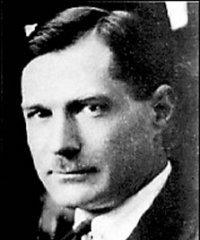
Quote by Yevgeny Zamyatin

Book:We

Work

We

This book delves into the complexities of group dynamics and the human condition, examining how individuals come together to form a collective identity. more

Author

Yevgeny Zamyatin
Yevgeny Zamyatin

Russian author known for his dystopian novel 'We'. Born on February 1, 1884, in Taganrog, Russia, he passed away on March 10, 1937. more

You May Also Like

“One night he sits up. In cots around him are a few dozen sick or wounded. A warm September wind pours across the countryside and sets the walls of the tent rippling. Werner’s head swivels lightly on his neck. The wind is strong and gusting stronger, and the corners of the tent strain against their guy ropes, and where the flaps at the two ends come up, he can see trees buck and sway. Everything rustles. Werner zips his old notebook and the little house into his duffel and the man beside him murmurs questions to himself and the rest of the ruined company sleeps. Even Werner’s thirst has faded. He feels only the raw, impassive surge of the moonlight as it strikes the tent above him and scatters. Out there, through the open flaps of the tent, clouds hurtle above treetops. Toward Germany, toward home. Silver and blue, blue and silver. Sheets of paper tumble down the rows of cots, and in Werner’s chest comes a quickening. He sees Frau Elena kneel beside the coal stove and bank up the fire. Children in their beds. Baby Jutta sleeps in her cradle. His father lights a lamp, steps into an elevator, and disappears. The voice of Volkheimer: What you could be. Werner’s body seems to have gone weightless under his blanket, and beyond the flapping tent doors, the trees dance and the clouds keep up their huge billowing march, and he swings first one leg and then the other off the edge of the bed. “Ernst,” says the man beside him. “Ernst.” But there is no Ernst; the men in the cots do not reply; the American soldier at the door of the tent sleeps. Werner walks past him into the grass. The wind moves through his undershirt. He is a kite, a balloon. Once, he and Jutta built a little sailboat from scraps of wood and carried it to the river. Jutta painted the vessel in ecstatic purples and greens, and she set it on the water with great formality. But the boat sagged as soon as the current got hold of it. It floated downstream, out of reach, and the flat black water swallowed it. Jutta blinked at Werner with wet eyes, pulling at the battered loops of yarn in her sweater. “It’s all right,” he told her. “Things hardly ever work on the first try. We’ll make another, a better one.” Did they? He hopes they did. He seems to remember a little boat—a more seaworthy one—gliding down a river. It sailed around a bend and left them behind. Didn’t it? The moonlight shines and billows; the broken clouds scud above the trees. Leaves fly everywhere. But the moonlight stays unmoved by the wind, passing through clouds, through air, in what seems to Werner like impossibly slow, imperturbable rays. They hang across the buckling grass. Why doesn’t the wind move the light? Across the field, an American watches a boy leave the sick tent and move against the background of the trees. He sits up. He raises his hand. “Stop,” he calls. “Halt,” he calls. But Werner has crossed the edge of the field, where he steps on a trigger land mine set there by his own army three months before, and disappears in a fountain of earth.”

“Had I been placed among those nations which are said to live still in the sweet freedom of nature's first laws, I assure you I should very gladly have portrayed myself here entire and wholly naked. Thus, reader, I am myself the matter of my book; you would be unreasonable to spend your leisure on so frivolous and vain a subject.”

“The Patriots had picked Brady in the sixth round, and he soon turned out to be one of the two or three best quarterbacks in the League, and absolutely perfect for the Belichick system and for the team's offense. So, as the team continued to make a series of very good calls on other player personnel choices, there was a general tendency to talk about how brilliant Pioli and Belichick were, and to regard Pioli as the best young player personnel man in the League. Just to remind himself not to believe all the hype and that he could readily have screwed up on that draft, Pioli kept on his desk a photo of Brady, along with a photo of the team's fifth-round traft choice, the man he had taken ahead of Brady: Dave Stachelski. He was a Tight End from Boise State who never a played a down for New England. Stachelski was taken with the 141st pick, Brady with the 199th one. 'If I was so smart,' Pioli liked to say, 'I wouldn't have risked an entire round of the draft in picking Brady.”

“Other priests, he knew, found an intense pleasure in the raw, salty dialect of peasant conversation. They picked up pearls of wisdom and experience over a farmhouse table or a cup of wine in a workingman's kitchen. They talked with equal familiarity to the rough-tongued whores of Trastevere and the polished signori of Parioli. They enjoyed the ribald humor of the fish market as much as the wit of a Cardinal's dinner table. They were good priests too, and they did much good for their people, with a singular satisfaction to themselves.”