Quotessence
Home / Quotes / Quote by Giovanni Papini

Quote by Giovanni Papini

Work

Relatório sobre os Homens

Browse quotes and source details for this work. more

Author
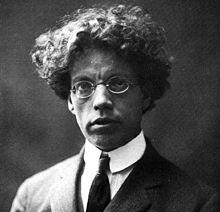
Giovanni Papini
Giovanni Papini

Giovanni Papini was an Italian journalist, writer, and critic, born on January 9, 1881, and died on July 8, 1956. He was a prominent figure in the intellectual and cultural circles of early 20th-century Italy, known for his extensive work in literature and journalism, contributing significantly to Italian intellectual life during that time. more

You May Also Like

“Tanto quanto a literatura, a música pode determinar uma reviravolta, um transtorno emotivo, uma tristeza ou um êxtase absolutos; tanto quanto a literatura, a pintura pode gerar um deslumbramento, um olhar novo depositado sobre o mundo. Mas só a literatura pode dar essa sensação de contato com outro espírito humano, com a integralidade desse espírito, suas fraquezas e grandezas, suas limitações, suas mesquinharias, suas ideias fixas, suas crenças; com tudo o que o comove, o interessa, o excita ou o repugna. Só a literatura permite entrar em contato com o espírito de um morto, da maneira mais direta, mais completa e até mais profunda do que a conversa com um amigo — por mais profunda e duradoura que seja uma amizade, numa conversa nunca nos entregamos tão completamente como o fazemos diante de uma página em branco, dirigindo-nos a um destinatário desconhecido.”

“No divórcio o amor é sepultado”

“The two friends went on and on toward the sierra, at times keeping the highway, at times. deviating from it. Whenever they passed through a town or a hamlet, the slow peal of bells tolling the death-knell announced to our hero that the Angel of Death was not losing his time; that his arm reached to every part of the world, and that, though Gil felt it now weighing upon his breast like a mountain of ice, none the less did it scatter ruin and desolation over the entire surface of the earth. As they went, the Angel of Death related many strange and wonderful things to his protege. The foe of history, he took pleasure in scoffing at its pretended utility, in disproof of which he narrated many facts as they had actually occurred, and not as they are recorded on monuments and in chronicles. The abysses of the past opened before the entranced imagination of Gil Gil, revealing to him facts of transcendent importance concerning the fate of man and of empires, disclosing to him the great mystery of the origin of life and the no less great and terrible mystery of the end to which we, wrongly called mortals, are progressing, and causing him, finally, to comprehend, by the light of this sublime philosophy, the laws which preside at the evolution of cosmic matter, and its various manifestations in those ephemeral and transitory forms which are called minerals, plants,animals, stars, constellations, nebula, and worlds. ("The Friend Of The Death")”

“Very well, but - who are you?' again asked Gil Gil, in whom curiosity was beginning to get the better of every other feeling. 'I told you that when I first spoke to you - I am your friend. And bear in mind that you are the only being on the face of the earth to whom I accord the title of friend. I am bound to you by remorse! I am the cause of all your misfortunes.' 'I do not know you,' replied the shoemaker. 'And yet I have entered your house many times! Through me you were left motherless at your birth; I was the cause of the apoplectic stroke that killed Juan Gil; it was I who turned you out of the palace of Rionuevo; I assassinated your old house-mate, and, finally, it was I who placed in your pocket the vial of sulfuric acid.' Gil Gil trembled like a leaf; he felt his hair stand on end, and it seemed to him as if his contracted muscles must burst asunder. 'You are the devil!' he exclaimed, with indescribable terror. 'Child!' responded the black-robed figure in accents of amiable censure, 'what has put that idea into your head? I am something greater and better than the wretched being you have named.' 'Who are you, then?' 'Let us go into the inn and you shall learn.' Gil hastily entered, drew the Unknown before the modest lantern that lighted the apartment, and looked at him with intense curiosity. He was a person about thirty-three years old; tall, handsome, pale, dressed in a long black tunic and a black mantle, and his long locks were covered by a Phrygian cap, also black. He had not the slightest sign of a beard, yet he did not look like a woman. Neither did he look like a man... ("The Friend of Death")”