“Solitude Happy the man, whose wish and care A few paternal acres bound, Content to breathe his native air In his own ground. Whose herds with milk, whose fields with bread, Whose flocks supply him with attire; Whose trees in summer yield him shade, In winter fire. Blest, who can unconcern’dly find Hours, days, and years, slide soft away In health of body, peace of mind, Quiet by day. Sound sleep by night; study and ease Together mix’d, sweet recreation, And innocence, which most does please With meditation. Thus let me live, unseen, unknown; Thus unlamented let me die; Steal from the world, and not a stone Tell where I lie.”
Quote by Alexander Pope
Author
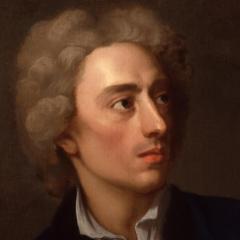
Alexander Pope
Alexander Pope, an English poet, was born on May 21, 1688, and died on May 30, 1744. He is renowned for his wit, satire, and elegant poetry, with his most famous works including 'An Essay on Criticism' and 'The Moral Essays'. Pope's works have had a profound impact on literature and philosophy, both in his time and today. more
You May Also Like
Source: The Woodlanders
Source: God's Joyful Surprise: Finding Yourself Loved
“The greatest thing in the world is to know how to live to yourself.”
“Crime, too, means solitude, even if a thousand people join together to commit it.”
Source: Caligula and Three Other Plays
Source: Anecdotes of Samuel Johnson, LL.D. during the last twenty years of his life
Source: The Essays of Michael De Montaigne, Vol. 2 of 3 (Classic Reprint): Translated Into English, With Very Considerable Amendments and Improvements From the Most Accurate French Edition of Peter Coste
“Older men declare war. But it is youth that must fight and die.”
Source: Éloge de la fuite