Quotessence
Home / Quotes / Quote by Audre Lorde

Quote by Audre Lorde

“For the master's tools will never dismantle the master's house. They may allow us temporarily to beat him at his own game, but they will never enable us to bring about genuine change. And this fact is only threatening to those women who still define the master's house as their only source of support.”

Quote by Audre Lorde

Work

Sister Outsider: Essays and Speeches

Sister Outsider is a compilation of essays and speeches by Audre Lorde, a prominent African American poet and civil rights activist. The book delves into the complexities of race, gender, and identity, offering a profound and personal perspective on these issues. Lorde's work is characterized by its powerful and poetic language, as she shares her experiences and insights on the challenges faced by marginalized communities. more

Author
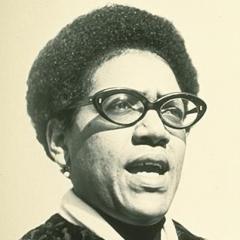
Audre Lorde
Audre Lorde

Audre Lorde, an American writer, poet, and speaker, was born on February 18, 1934, and passed away on November 17, 1992. Known for her profound insights into race, gender, and sexual orientation, her work encompasses poetry, prose, and novels, which have had a profound impact on contemporary literature and social movements. more

You May Also Like

“The main industry of queer Theorists is to intentionally conflate two meanings of "normative," and deliberately make strategic use of the moral understanding of the term to contrive problems with its descriptive meaning.”

“Дядя Лота — Авраам — является основателем всех трёх «великих» монотеистических религий. Благодаря своему патриаршему статусу он достоин служить образцом для подражания разве что чуть меньше самого бога. Но кто из современных моралистов согласился бы следовать его примеру? Ещё на заре своей долгой жизни Авраам, чтобы пережить голод, в сопровождении жены Сарры отправился в Египет. Сообразив, что египтяне, возможно, соблазнятся его красавицей женой и это поставит жизнь мужа под угрозу, он решает выдать её за свою сестру. Как таковую её забирают в гарем фараона, который, соответственно, осыпает Авраама почестями. Богу, однако, эта ловкая проделка пришлась не по вкусу, и он наслал болезнь на фараона и дом его (интересно, почему не на Авраама?). Расстроенный, как нетрудно догадаться, фараон поинтересовался, почему Авраам скрыл от него, что Сарра — его жена, затем вернул её Аврааму и выпроводил обоих из Египта (Быт. 12:18–19). Как ни поразительно, впоследствии эта парочка пыталась сыграть такую же шутку с Авимелехом, царём Герарским. Авраам и его уговорил жениться на Сарре, выдав её за сестру (Быт. 20:2–5). Позднее тот, в сходных с фараоном выражениях, выразил своё возмущение; и трудно им обоим не посочувствовать. И не является ли это очередное повторение текста дополнительным свидетельством его ненадёжности?”

“Heightened data competence can therefore ensure data is used to improve the lives and experiences of LGBTQ people rather than only serve the interests of, what Catherine D’Ignazio and Lauren F. Klein described as, the three S's: science (universities), surveillance (governments), and selling (corporations).”

“Hacking described his research interest ‘in classifications of people, in how they affect the people classified, and how the affects on the people in turn change the classifications.’ Hacking labeled the subjects of these studies ‘moving targets’ because researchers’ investigatory efforts change them in ways so ‘they are not quite the same kind of people as before.”

“Considering the Scottish census through these theoretical lenses, where the census is not a neutral representation of a reality but a tool to construct a governable population, raises questions as to whether the census is an exercise in knowledge construction or a tool to bolster the state’s capacity to manage its population. These two objectives are not exclusive: improved knowledge likely facilitates the design of more efficient ways to coerce, control and discipline people who live within a state's jurisdiction. However, if the construction of knowledge is no longer the primary purpose of a census, this throws into doubt then need for a census to collect accurate information that authentically represents the lives and experiences of the people about whom the data relates.”

“The cleaning of data can remove its queerness: paper surveys where respondents score out the response options ‘female’ and ‘male’ and write their own answer, interview recordings were participants flip the focus and ask questions of the researcher, census returns where LGBTQ couples identify themselves as ‘married’ even when governments do not recognize same sex marriage. These examples demonstrate how collection methods can fail to restrict how participants share data about their lives and experiences. … cleaning, which involves the removal of data that breaks established rules”