Quotessence
Home / Quotes / Quote by Victor Hugo

Quote by Victor Hugo

“Moreover, their bearing was firmer and more confident than ever; excessive sacrifice is a support. They had hope no longer, but they had despair. Despair, final arm, which sometimes gives victory. Virgil has said so. Supreme resources spring from extreme resolutions. To embark in death is sometimes a means of escaping a shipwreck and the coffin lid becomes a plank of safety.”

Quote by Victor Hugo

Work

Les Misérables

Victor Hugo's 'Les Misérables' is an epic narrative that delves into the lives of various characters, including Jean Valjean, a former convict seeking redemption, and Fantine, a woman struggling in poverty. The story is rich in historical detail and moral complexity, offering a profound examination of society's flaws and the resilience of the human spirit. more

Author

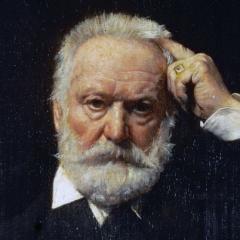
Victor Hugo
Victor Hugo

Victor Hugo, a French romantic poet, novelist, and playwright, was born on February 26, 1802, and died on May 22, 1885. He is considered one of the greatest writers in French literary history, known for his profound humanistic concerns and rich imagination. more

You May Also Like

“I had what might truly be called an object in life: to be a reformer of the world … This did very well for several years, during which the general improvement going on in the world and the idea of myself as engaged with others in struggling to promote it, seemed enough to fill up an interesting and animated existence. But the time came when I awakened from this as from a dream … In this frame of mind it occurred to me to put the question directly to myself: ‘Suppose that all your objects in life were realised; that all the changes in institutions and opinions that you are looking forward to, could be completely effected at this very instant; would this be a great joy and happiness to you?’ And an irrepressible self-consciousness distinctly answered: ‘No!’ At this my heart sank within me; the whole foundation on which my life was constructed fell down. All my happiness was to have been found in the continual pursuit of this end. The end had ceased to charm, and how could there ever again be any interest in the means? I seemed to have nothing left to live for.”

“Oral histories from the period testify to the hope and excitement that Fascism generated. Men and women who had despaired of political change suddenly felt in touch with the answers they had been seeking. Eagerly they traveled long distances to attend Fascist rallies, where they discovered kindred souls keen to restore greatness to the nation, traditional values to the community, and optimism about the future. Here, in this crusade, they heard explanations that made sense to them about the powerful currents that were at work in the world. Here were the chances they had sought to participate in youth groups, athletic organizations, charity drives, and job-training activities. Here were the connections they needed to start a new business or take out a loan. Many families that had stopped after bearing two children, thinking that number all they could afford, now found the confidence to bear four or five or six. In the congenial company of fellow Fascists, they could share an identity that seemed right to them and engage in a cause that each could serve with gladness and singleness of heart. These were prizes, they believed, worth marching for and even giving up democratic freedoms for—provided their leaders could do as promised and make their fantasies real.”

“Why do I speak of joy or write of love, When my heart is the very den of horror, And in my soul the pains of hell I prove, With all his tormented and infernal terror? What should I say? what yet remains to do? My brain is dry with weeping all too long; My signs be spent in utt'ring of my woe, And I want words wherewith to tell my wrong. Love's Lunacy: Sonnet XLI”