Quotessence
Home / Quotes / Quote by Gregory Maguire

Quote by Gregory Maguire

“... the tilting of an eyebrow. This was too obscure a hieroglyphic for the Vicar to decipher, no matter how Miss Armstrong concentrated the pure fire of her being in the muscles of her forehead. One day she would self-immolate... Spontaneous combustion caused by an eyebrow left to smolder a moment too long.”

Quote by Gregory Maguire

Work

After Alice

Browse quotes and source details for this work. more

Author

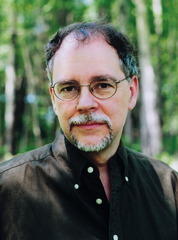
Gregory Maguire
Gregory Maguire

Gregory Maguire is an American novelist known for his reinterpretation of classic fairy tales. His works are characterized by profound moral implications and rich imagination, which have won him a wide audience. more

You May Also Like

“Tell me again what you said at the revel,' he says, climbing over me, his body against mine. 'What?' I can barely think. 'That you hate me,' he says, his voice hoarse. 'Tell me that you hate me.' 'I hate you,' I say, the words coming out like a caress. I say it again, over and over. A litany. An enchantment. A ward against what I really feel. 'I hate you. I hate you. I hate you.' He kisses me harder. 'I hate you,' I breathe in to his mouth. 'I hate you so much that sometimes I can't think of anything else.' At that, he makes a harsh, low sound.”

“Many people do not understand the art of winning and this has been the case for many centuries. There was once a Shaolin monk who was constantly being challenged to fight. He always won, even against the angriest and strongest fighters, because they could not understand that technique is always superior to personal will and expectations. Some of the men noticed his skill and asked to be trained with him, and once their technique was good enough, they would try to defeat him. But the monk would defeat them instead because they could not understand that experience is always superior to technique. As the monk grew older, he did not desire to fight anymore, and so many men would insult him. But the monk was still winning,  because they could not understand that they were wasting an opportunity to learn and the monk did not desire to waste the little time he had left on earth. Before he died, the monk wrote a few manuscripts with his wisdom, but few were capable of understanding his words because their spirit was not ready. They were still thinking about winning. And so they lost everything, they lost the opportunity to develop a new technique, gain experience, study and understand how to win.”

“True love is found only when paths cross, not from the angle of what is observed within a cognitive conceptualization but rather the angle of spiritual desire. It is in this outcome, manifested in a receiving through giving, gaining through offering and winning through losing, that you understand the mystery veiled by the emotions you have attracted. Then, and only then, you will understand the limitations of distance, time and location as merely distractions in the path to the ultimate goal, which is the fulfilling of your own faith. That faith is rewarded through the eyes that will reflect your own desires.”

“En réalité, j’ai l’impression que la structure fondamentale du désir se situe justement ici : il est propulsé par l’exigence de mettre à portée quelque chose qui ne l’est pas (encore). Et là se trouve peut-être la clé permettant de nous soustraire au jeu de l’accroissement sans limites auquel se livre la modernité et à son ambition de rendre tout et chacun disponible, de la priver de l’énergie de propulsion dont elle a besoin, de débrancher en quelque sorte sa « prise libineuse ». Ma thèse est que la structure fondamentale du désir humain est un désir de relation : nous voulons atteindre ou rendre atteignable quelque chose qui n’est pas « à notre disposition ». Ce quelque chose peut être, par exemple, une nouvelle guitare ou une tablette tactile, un lac ou un être aimé. Dans tous ces cas, le désir vise à entrer avec ce qui est désiré dans une relation responsive ; de placer la guitare, la personne ou le lac dans un rapport de réponse, ou d’entrer avec la tablette dans des relations responsives avec le monde. Mais dans chaque cas, je l’affirme, le désir s’éteint lorsqu’il n’y a plus rien à « découvrir » sur ou avec le vis-à-vis, si nous maîtrisons et contrôlons toutes ses propriétés, si nous en disposons totalement. Une fois de plus, nous pouvons donc aussi parler de « semi-disponibilité » : nous ne pouvons pas désirer une personne ou une guitare si nous ne savons strictement rien d’elle et si nous ne l’avons jamais vue. Dans la première dimension, l’objet du désir doit donc être au moins partiellement et temporairement disponible, sans quoi il renvoie à une « nostalgie sans nom », dans laquelle l’objet du désir est le désir lui-même. La disposition complète, dans la totalité des quatre dimensions, provoque en revanche l’extinction du désir : le jeu perd son objet, la musique son attrait, l’amour son ardeur. L’indisponibilité complète est dépourvue de sens au regard du désir, mais la disponibilité totale est sans attrait. Cela signifie qu’une relation réussie au monde vise à l’atteignabilité, pas à la disponibilité. Il faut qu’un vis-à-vis soit atteignable sous une forme quelconque, il doit être possible de nouer avec lui un rapport de réponse qui ne soit pas erratique, c’est-à-dire complètement fortuit, mais qui ne soit pas non plus entièrement contrôlable, et qui, à partir de cette structure même, enclenche l’interaction entre l’interpellation, l’efficacité personnelle et la transformation, permettant ainsi l’expérience de la vitalité.”