Quotessence
Home / Quotes / Quote by Wislawa Szymborska

Quote by Wislawa Szymborska

“The world – whatever we might think when terrified by its vastness and our own impotence, or embittered by its indifference to individual suffering, of people, animals, and perhaps even plants, for why are we so sure that plants feel no pain; whatever we might think of its expanses pierced by the rays of stars surrounded by planets we've just begun to discover, planets already dead? still dead? we just don’t know; whatever we might think of this measureless theater to which we've got reserved tickets, but tickets whose lifespan is laughably short, bounded as it is by two arbitrary dates; whatever else we might think of this world – it is astonishing. But ‘astonishing’ is an epithet concealing a logical trap. We’re astonished, after all, by things that deviate from some well-known and universally acknowledged norm, from an obviousness we've grown accustomed to. Now the point is, there is no such obvious world. Our astonishment exists per se and isn't based on comparison with something else. Granted, in daily speech, where we don’t stop to consider every word, we all use phrases like ‘the ordinary world,’ ‘ordinary life,’ ‘the ordinary course of events’ … But in the language of poetry, where every word is weighed, nothing is usual or normal. Not a single stone and not a single cloud above it. Not a single day and not a single night after it. And above all, not a single existence, not anyone’s existence in this world.”

Quote by Wislawa Szymborska

Author
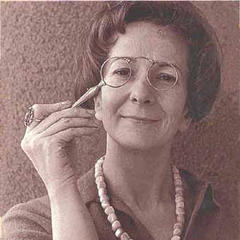
Wislawa Szymborska
Wislawa Szymborska

Wisława Szymborska was a distinguished Polish poet celebrated for her concise, witty, and thought-provoking verses. Born on July 2, 1923, in Kraków, she spent much of her life in the city, which deeply influenced her work. Szymborska's poetry often explores themes of human experience, nature, and the absurdity of life. She was awarded the Nobel Prize in Literature in 1996, making her the sixteenth woman to receive the honor. She passed away on February 1, 2012. more

You May Also Like

“The writer’s method of attaining the essential was different from that of the thinker or the scientist. These, said Conrad, knew the world by systematic examination. To begin with the artist had only himself; he descended within himself and in the lonely regions to which he descended, he found “the terms of his appeal”. He appealed, said Conrad, “to that part of our being which is a gift, not an acquisition, to the capacity for delight and wonder… our sense of pity and pain, to the latent feeling of fellowship with all creation – and to the subtle but invincible conviction of solidarity that knits together the loneliness of innumerable hearts… which binds together all humanity – the dead to the living and the living to the unborn.”

“Les pays les plus prospères ont réussi à accumuler des pouvoirs de destruction tels que d'anéantir, cent fois, non seulement tous les êtres humains qui ont existé à ce jour, mais aussi la totalité de tous les êtres vivants qui ont jamais dessiné souffle sur cette planète du malheur. Un jour comme aujourd'hui, mon maître William Faulkner dit: «Je refuse d'accepter la fin de l'homme." Je tomberais indigne de se tenir dans ce lieu qui était le sien, si je devais pas pleinement conscients que la tragédie colossale qu'il a refusé de reconnaître, il y a trente-deux ans est maintenant, pour la première fois depuis le début de l'humanité, rien de plus qu'un simple possibilité scientifique. Face à cette réalité impressionnante qui a dû sembler une simple utopie à travers tout le temps humain, nous, les inventeurs de contes, qui croire quoi que ce soit, se sentent en droit de croire qu'il n'y a pas encore trop tard pour participer à la création de l'utopie opposée . Une nouvelle et radicale utopie de la vie, où personne ne sera en mesure de décider pour les autres comment ils meurent, où l'amour se révélera vrai bonheur et être possible, et où les races condamnées à cent ans de solitude aura enfin et pour toujours , une deuxième chance sur la terre." ― Gabriel Garcí­a Márquez, Nobel lecture (8 Décembre 1982)”

“What are humanity’s great dreams? To conquer the world? To split the atom? When Alexander spread his empire from the Mediterranean to India, we say he conquered the world, but he barely touched a quarter of it. We lie. We lie again when we say we split the atom. ‘Atom’ was supposed to be the smallest piece of matter—all we did is give that name to something we can split, knowing that there are quarks and tensors, other pieces smaller that we cannot touch, and only these deserve the title ‘atom.’ Man is more ambitious than patient. When we realize we cannot split a true atom, cannot conquer the whole Earth, we redefine the terms to fake our victory, check off our boxes and pretend the deed is done. Alexander conquered Earth, we tell ourselves, Rutherford split the atom, no need to try again. Lies.”