“Necessity is the mother of invention.”
Book:Aesop's fables
“Necessity is the mother of invention.”
This celebrated anthology gathers hundreds of brief narratives in which anthropomorphized animals encounter human situations, learning through their Experiences and choices lessons about honesty, greed, humility, perseverance, and virtue. The exact origins of the fables remain shrouded in antiquity, with the figure of Aesop himself existing somewhere between history and legend, possibly as a freed slave from ancient Greece. The stories have survived through centuries primarily via oral tradition before being compiled in written form, and they have since been translated into countless languages and adapted for audiences of all ages. Each tale typically concludes with a succinct moral that distills the lesson into a memorable principle, making these fables enduring tools for teaching values to young readers while remaining resonant with mature audiences. The collection has exerted enormous influence on Western literary tradition and continues to be read worldwide as foundational examples of the fable genre. more
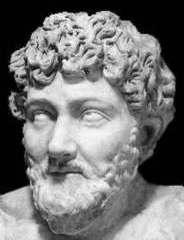
Aesop, born around 620 BC and died around 564 BC, was a renowned Greek fabulist. His life remains shrouded in mystery, with accounts suggesting he was born in Ionia and later became a slave. Aesop is famous for his concise and profound fables, which have been widely celebrated and continue to influence literature and moral education to this day. more
“You are not defined by what others say about you; you are defined by what you know yourself to be.”
“There are no limits except the ones you place on yourself.”
“No one is more powerful than a person with a vision.”
“Was there ever a more empowering phrase than 'keep the change?”