Quotessence
Home / Quotes / Quote by Lewis Carroll

Quote by Lewis Carroll

Work

Alice's Adventures in Wonderland

This renowned work of children's literature, written by Lewis Carroll, combines elements of fantasy and satire. The narrative follows Alice's journey through a whimsical and often nonsensical world, where she encounters a variety of strange characters such as the Cheshire Cat, the Mad Hatter, and the Queen of Hearts. The story is celebrated for its imaginative storytelling and has become a staple in Western literature. more

Author
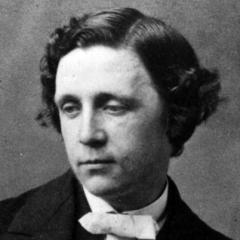
Lewis Carroll
Lewis Carroll

Lewis Carroll, born Charles Lutwidge Dodgson, was an English writer, mathematician, logician, photographer, and children's author. He is best known for his novel Alice's Adventures in Wonderland, which is celebrated for its unique imagination, rich symbolism, and humor. more

You May Also Like

“A razão de por que sua ideia de Nova York pode ser mais ou menos verdadeira do que a minha é que Nova York é um lugar real, que existe independente do que qualquer um de nós pense. Se ao pronunciar "Nova York" cada um de nós quisesse dizer meramente "a cidade que estou imaginando na minha mente", como é que se poderia supor que algum de nós tivesse ideias mais verdadeiras do que o outro? No fim das contas, não seria questão de verdadeiro ou falso.”

“O príncipe fala de acordo com o que lhe ensinaram. [...] Os monarcas de sua raça têm pavor do mar, porque não podem esquecer que, em todas as histórias, Aslam veio de além-mar. Não se aproximam dele, nem querem que ninguém se aproxime. Por isso deixam crescer as florestas que os separam da costa. E porque brigam com as árvores têm medo dos bosques. E, porque têm medo dos bosques, acham que estes são povoados de fantasmas. E são os próprios reis que, odiando o mar, acreditam em parte nessas histórias e levam os outros a acreditar. Sentem -se mais seguros sabendo que ninguém em Nárnia ousa aproximar-se da costa e olhar o mar... olhar para o país de Aslam, para o nascente....”

“Mestre. Say the word without hissing the conurbated villain, and pitying its citizens. As quickly as they can, two million tourists pass through, or by, Mestre each year, and each one will be struck by the same thought as they wonder at the aesthetic opposition that it represents. Mestre is an ugly town but ugly only in the same way that Michael Jackson might be desccribed as eccentric or a Tabasco Vindaloo flambéed in rocket fuel might be described as warm. Mestre is almost excremental in its hideousness: a fetid, fly-blown, festering, industrial urbanization, scarred with varicose motorways, flyovers, rusting railway sidings and the rubbish of a billion holidaymakers gradually burning, spewing thick black clouds into the Mediterranean sky. A town with apparently no centre, a utilitarian ever-expandable wasteland adapted to house the displaced poor, the shorebound, outpriced, domicile-deprived exiles from its neighbouring city. For, just beyond the condom- and polystyrene-washed, black-stained, mud shores of Marghera, Mestre's very own oil refinery, less than a mile away across the waters of the lagoon in full sight of its own dispossessed citizens, is the Jewel of Adriatic. Close enough for all to feel the magnetism, there stands the most beautiful icon of Renaissance glory and, like so much that can attract tourism, a place too lovely to be left in the hands of its natives, the Serenissima itself, Venice.”