Quotessence
Home / Quotes / Quote by Joseph Conrad

Quote by Joseph Conrad

“--From "A Familiar Preface", 1912(PR,pp,19-20): “At a time when nothing which is not revolutionary in some way or other can expect to attract much attention I have not been revolutionary in my writings. The revolutionary spirit is mighty convenient in this, that it frees one from all scruples as regards ideas. Its hard, absolute optimism is repulsive to my mind by the menace of fanaticism and intolerance it contains. No doubt one should smile at these things;but, imperfect Esthete, I am no better Philosopher.”

Quote by Joseph Conrad

Author
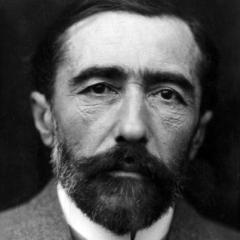
Joseph Conrad
Joseph Conrad

Joseph Conrad, born on December 3, 1857 in Poland and died on August 3, 1924 in the United Kingdom, was a renowned British author of the late 19th and early 20th centuries. He is known for his profound descriptions of maritime life and his insightful explorations of human nature. more

You May Also Like

“When, then, the Social Democrat worker found himself in the economic crisis which degraded him to the status of a coolie, the development of his revolutionary sentiments was severely retarded by the conservative structuralization that had been taking shape in him for decades. Either he remained in the camp of the Social Democrats, notwithstanding his criticism and rejection of their policies, or he went over to the NSDAP [Nazi party] in search of a better replacement. Irresolute and indecisive, owing to the deep contradiction between revolutionary and conservative sentiments, disappointed by his own leadership, he followed the line of least resistance. Whether he would give up his conservative tendencies and arrive at a complete consciousness of his actual responsibility in the production process, i.e., at a revolutionary consciousness, depended solely on the correct or incorrect leadership of the revolutionary party. Thus the communist assertion that it was the Social Democrat policies that put fascism in the saddle was correct from a psychological viewpoint. Disappointment in Social Democracy, accompanied by the contradiction between wretchedness and conservative thinking, must lead to fascism if there are no revolutionary organizations. For example, following the fiasco of the Labor party's policies in England, in 1930–31, fascism began to infiltrate the workers who, then, in the election of 1931, cut away to the Right, instead of going over to communism.”

“Conventional, organized religion, in its most decadent form, is an inert parody of the genuine religious experience as much as modern occult organizations are degenerate parodies of forgotten religions.”

“We are returning to the old subject; and this was to be a business talk. It is quite useless, I assure you, to tell me I might have done all sorts of things. I shall never do them now. But I may be able to help you in thinking out your plan. What is it?” “You begin by telling me that it is useless for me to suggest anything, and then ask what I want to suggest. My plan requires your help in action, not only in thinking out.”

“We don’t have anything to fear. I don’t know tonight whether I’ll actually get back to Ruleville! But all that they can destroy is the Fannie Lou that you meet tonight. But it’s the Fannie Lou that God hold will keep on living, day after day!”

“The magic of Faërie is not an end in itself, its virtue is in its operations: among these are the satisfaction of certain primordial human desires. One of these desires is to survey the depths of space and time. Another is (as will be seen) to hold communion with other living things. A story may thus deal with the satisfaction of these desires, with or without the operation of either machine or magic, and in proportion as it succeeds it will approach the quality and have the flavour of fairy-story.”