“To get from the tangible to the intangible (which mature artists in any medium claim as part of their task) a paradox of some kind has frequently been helpful. For the photographer to free himself of the tyranny of the visual facts upon which he is utterly dependent, a paradox is the only possible tool. And the talisman paradox for unique photography is to work "the mirror with a memory" as if it were a mirage, and the camera is a metamorphosing machine, and the photograph as if it were a metaphor…. Once freed of the tyranny of surfaces and textures, substance and form [the photographer] can use the same to pursue poetic truth" (Minor White, Newhall, 281).”
Quote by Minor White
Author
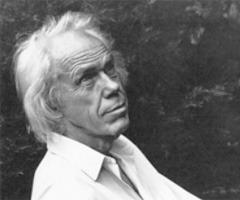
Minor White
Minor White (July 9, 1908 – June 24, 1976) was an American photographer, critic, and educator, renowned for his abstract, symbolic black-and-white photographs. He was a key figure in mid-20th-century photography, advocating for the medium as a means of spiritual expression. White served as editor of Aperture magazine and taught at the Massachusetts Institute of Technology, influencing generations of photographers. His work often explores the deep connections between nature and human emotion, blending mysticism with visual aesthetics. more
You May Also Like
Source: The Kind of Substance You Need For Your Success
Source: Use Of Weapons
Source: Modoc: The True Story of the Greatest Elephant That Ever Lived
“Comparisons are like rigid fingers—eager to point at a subject but unwilling to grasp it.”
Source: Smile Anyway: Quotes, Verse, & Grumblings for Every Day of the Year
Source: On Being a Rat and Other Observations
“It’s comforting to me,” he added, “that beauty can come from violence, if only in metaphor.”
Source: The Four Stages of Cruelty
“Bil ki Cafer, ben geleceği görüyorum diyen, her zulmü kendisine hak görecektir.!”
Source: Sultan Selahaddin El Kürdi
Source: Soulfire