Quotessence
Home / Quotes / Quote by Robert H. Jackson

Quote by Robert H. Jackson

Work

You Have the Right to Remain Innocent

Browse quotes and source details for this work. more

Author
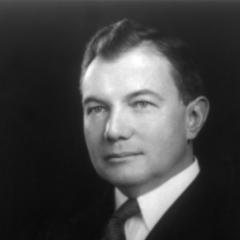
Robert H. Jackson
Robert H. Jackson

Robert H. Jackson was a former Associate Justice of the Supreme Court of the United States, known for his contributions to the field of law and the judiciary. He was born on February 13, 1892, and died on October 9, 1954. more

You May Also Like

“If you are asked any question by a police officer or a government agent and you realize that it is not in your best interest to answer, you should not mention the Fifth Amendment privilege or tell the police that you wish to exercise your right to avoid incriminating yourself. In this day and age, there is too great a danger that the police and the prosecutor might later persuade the judge to use that statement against you as evidence of your guilt. And if they do, to make matters much worse, you have no guarantee that the FBI agent in your case will not slightly misremember your exact words. [....] Even if the officer gets only a few words wrong, it only takes a slight rewording of the privilege to make it sound like a confession. So what do you do instead? Instead mention your Sixth Amendment right to a lawyer, and tell the police that you want a lawyer.”

“The complexity of modern federal criminal law, codified in several thousand sections of the United States Code and the virtually infinite variety of factual circumstances that might trigger an investigation into a possible violation of the law, make it difficult for anyone to know, in advance, just what particular set of statements might later appear (to a prosecutor) to be relevant to some such investigation.”

“Do you know where you were on Thursday evening at about eight o'clock last week, and who you were with, and what you were doing? Are you absolutely certain beyond any shadow of a doubt? Would you bet your life on it? If there is any possibility—no matter how slim or remote—that you could possibly be mistaken about such a thing, you are the kind of person who should never agree to talk to the police under just about any circumstances for as long as you live. And that includes practically everybody.”

“In 2016, into this tangle of worry and anger, came a showman who made big promises. A man who swore he would drain the swamp, then surrounded himself with the lobbyists and billionaires who run the swamp and feed off government favors. A man who talked the talk of populism but offered the very worst of trickle-down economics. A man who said he knew how the corrupt system worked because he had worked it for himself many times. A man who vowed to make America great again and followed up with attacks on immigrants, minorities, and women. A man who was always on the hunt for his next big con.”

“But even when Facebook isn't deliberately exploiting its users, it is exploiting its users—its business model requires it. Even if you distance yourself from Facebook, you still live in the world that Facebook is shaping. Facebook, using our native narcissism and our desire to connect with other people, captured our attention and our behavioral data; it used this attention and data to manipulate our behavior, to the point that nearly half of America began relying on Facebook for news. Then, with the media both reliant on Facebook as a way of reaching readers and powerless against the platform's ability to suck up digital advertising revenue—it was like a paperboy who pocketed all the subscription money—Facebook bent the media's economic model to match its own practices: publications needed to capture attention quickly and consistently trigger high emotional responses to be seen at all. The result, in 2016, was an unending stream of Trump stories, both from the mainstream news and from the fringe outlets that were buoyed by Facebook's algorithm. What began as a way for Zuckerberg to harness collegiate misogyny and self-interest has become the fuel for our whole contemporary nightmare, for a world that fundamentally and systematically misrepresents human needs.”

“When I threw the stick at Jamie, I hadn't intended to hit him with it. But the moment it left my hand, I knew that's what was going to happen. I didn't yet know any calculus or geometry, but I was able to plot, with some degree of certainty, the trajectory of that stick. The initial velocity, the acceleration, the impact. The mathematical likelihood of Jamie's bloody cheek. It had good weight and heft, that stick. It felt nice to throw. And it looked damn fine in the overcast sky, too, flying end over end, spinning like a heavy, two-pronged pinwheel and (finally, indifferently, like math) connecting with Jamie's face. Jamie's older sister took me by the arm and she shook me. Why did you do that? What were you thinking? The anger I saw in her eyes. Heard in her voice. The kid I became to her then, who was not the kid I thought I was. The burdensome regret. I knew the word "accident" was wrong, but I used it anyway. If you throw a baseball at a wall and it goes through a window, that is an accident. If you throw a stick directly at your friend and it hits your friend in the face, that is something else. My throw had been something of a lob and there had been a good distance between us. There had been ample time for Jamie to move, but he hadn't moved. There had been time for him to lift a hand and protect his face from the stick, but he hadn't done that either. He just stood impotent and watched it hit him. And it made me angry: That he hadn't tried harder at a defense. That he hadn't made any effort to protect himself from me. What was I thinking? What was he thinking? I am not a kid who throws sticks at his friends. But sometimes, that's who I've been. And when I've been that kid, it's like I'm watching myself act in a movie, reciting somebody else's damaging lines. Like this morning, over breakfast. Your eyes asking mine to forget last night's exchange. You were holding your favorite tea mug. I don't remember what we were fighting about. It doesn't seem to matter any more. The words that came out of my mouth then, deliberate and measured, temporarily satisfying to throw at the bored space between us. The slow, beautiful arc. The spin and the calculated impact. The downward turn of your face. The heavy drop in my chest. The word "accident" was wrong. I used it anyway.”

“Donald Trump is magnificently terrifying to reasonable Americans because his popularity, win or lose, illuminates a massive stratum of voting, gun-toting Americans who want desperately to be told that their binary values are valid. They want someone to enunciate for them what they know in their heart of hearts: that they and their prejudices and their lust for violence and their stalwart refusal to take part in a complex world of political moving parts puts them in league with the men who waited for the British, guns in hand at Concord Bridge.”