Quotessence
Home / Authors / Robert H. Jackson
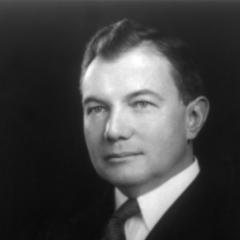
Robert H. Jackson

Robert H. Jackson Quotes

Former Associate Justice of the Supreme Court of the United States

Filter quotes by topic

Famous Robert H. Jackson Quotes

“Struggles to coerce uniformity of sentiment in support of some end thought essential to their time and country have been waged by many good as well as by evil men. Nationalism is a relatively recent phenomenon but at other times and places the ends have been racial or territorial security, support of a dynasty or regime, and particular plans for saving souls. As first and moderate methods to attain unity have failed, those bent on its accomplishment must resort to an ever-increasing severity. . . . Those who begin coercive elimination of dissent soon find themselves exterminating dissenters. Compulsory unification of opinion achieves only the unanimity of the graveyard. It seems trite but necessary to say that the First Amendment to our Constitution was designed to avoid these ends by avoiding these beginnings. There is no mysticism in the American concept of the State or of the nature or origin of its authority. We set up government by consent of the governed, and the Bill of Rights denies those in power any legal opportunity to coerce that consent. Authority here is to be controlled by public opinion, not public opinion by authority. If there is any fixed star in our constitutional constellation, it is that no official, high or petty, can prescribe what shall be orthodox in politics, nationalism, religion, or other matters of opinion or force citizens to confess by word or act their faith therein.”

“The physical power to get the money does not seem to me a test of the right to tax. Might does not make right even in taxation. To hold that what the use of official authority may get the state may keep, and that if it cannot get hold of a nonresident stockholder it may hold the company as hostage for him, is strange constitutional doctrine to me.”

“I do not know whether it is the view of the Court that a judge must be thick-skinned or just thick-headed, but nothing in my experience or observation confirms the idea that he is insensitive to publicity. Who does not prefer good to ill report of his work? And if fame a good public name is, as Milton said, the "last infirmity of noble mind", it is frequently the first infirmity of a mediocre one.”

“But an escape less self-depreciating was taken by Lord Westbury, who, it is said, rebuffed a barrister's reliance upon an earlier opinion of his Lordship: "I can only say that I am amazed that a man of my intelligence should have been guilty of giving such an opinion". If there are other ways of gracefully and good-naturedly surrendering former views to a better considered position, I invoke them all.”

“Of course, such judicial misconstruction theoretically can be cured by constitutional amendment. But the period of gestation of a constitutional amendment, or of any law reform, is reckoned in decades usually; in years, at least. And, after all, as the Court itself asserted in overruling the minimum-wage cases, it may not be the Constitution that was at fault.”

“Perhaps you have heard about the college executives who were discussing what they wanted to do after retirement age. One hoped to run a prison or school of correction so that the alumni would never come back to visit. Another chose to manage an orphan asylum so that he would not be plagued with advice from parents.”

“Particularly when the war power is invoked to do things to the liberties of people, or to their property or economy that only indirectly affect conduct of the war and do not relate to the engagement of the war itself, the constitutional basis should be scrutinized with care. ... I would not be willing to hold that war powers may be indefinitely prolonged merely by keeping legally alive a state of war that had in fact ended. I cannot accept the argument that war powers last as long as the effects and consequences of war for if so they are permanent -- as permanent as the war debts.”

“With the law books filled with a great assortment of crimes, a prosecutor stands a fair chance of finding at least a technical violation of some act on the part of almost anyone. In such a case, it is not a question of discovering the commission of a crime and then looking for the man who has committed it, it is a question of picking the man and then searching the law books, or putting investigators to work, to pin some offense on him.”

“The Tax Court is independent, and its neutrality is not clouded by prosecuting duties. Its procedures assure fair hearings. Its deliberations are evidenced by careful opinions. All guides to judgment available to judges are habitually consulted and respected. It has established a tradition of freedom from bias and pressures. It deals with a subject that is highly specialized and so complex as to be the despair of judges. It is relatively better staffed for its task than is the judiciary.”

“The very purpose of a Bill of Rights was to withdraw certain subjects from the vicissitudes of political controversy. One's right to life, liberty and property, to free speech, a free press, freedom of worship and assembly may not be submitted to vote; they depend on no elections.”