Quotessence
Home / Quotes / Quote by Wilhelm Reich

Quote by Wilhelm Reich

“Fui acusado de ser um utópico, de querer eliminar o desprazer do mundo e defender apenas o prazer. Contudo, tenho declarado claramente que a educação tradicional torna as pessoas incapazes para o prazer encouraçando-as contra o desprazer. Prazer e alegria de viver são inconcebíveis sem luta, experiências dolorosas e embates desagradáveis consigo mesmo. A saúde psíquica não se caracteriza pela teoria do nirvana dos iogues e dos budistas, nem pela hedonismo dos epicuristas, nem pela renúncia monástica; caracteriza-se, isso sim, pela alternância entre a luta desprazerosa e a felicidade, o erro e a verdade, o desvio e a correção da rota, a raiva racional e o amor racional; em suma, estar plenamente vivo em todas as situações da vida. A capacidade de suportar o desprazer e a dor sem se tornar amargurado e sem se refugiar na rigidez, anda de mãos dadas com a capacidade de aceitar a felicidade e dar amor.”

Quote by Wilhelm Reich

Work

The function of the orgasm

This book delves into the scientific and psychological aspects of human orgasm, examining its role in human sexuality and its impact on physical and mental health. more

Author
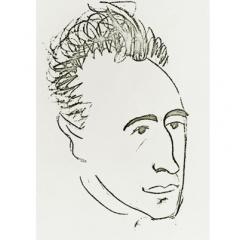
Wilhelm Reich
Wilhelm Reich

Wilhelm Reich was a prominent psychoanalyst, born on March 24, 1897, and died on November 3, 1957. He made significant contributions to the field of psychoanalysis, particularly in the areas of sexual psychology and orgonomy. more

You May Also Like

“The Elsinore's bow tilted skyward while her stern fell into a foaming valley. Not a man had gained his feet. Bridge and men swept back toward me and fetched up against the mizzen-shrouds. And then that prodigious, incredible old man appeared out of the water, on his two legs, upright, dragging with him, a man in each hand, the helpless forms of Nancy and the Faun. My heart leapt at beholding this mighty figure of a man-killer and slave-driver, it is true, but who sprang first into the teeth of danger so that his slaves might follow, and who emerged with a half-drowned slave in either hand. I knew augustness and pride as I gazed--pride that my eyes were blue, like his; that my skin was blond, like his; that my place was aft with him, and with the Samurai, in the high place of government and command. I nearly wept with the chill of pride that was akin to awe and that tingled and bristled along my spinal column and in my brain. As for the rest--the weaklings and the rejected, and the dark-pigmented things, the half-castes, the mongrel-bloods, and the dregs of long-conquered races--how could they count? My heels were iron as I gazed on them in their peril and weakness. Lord! Lord! For ten thousand generations and centuries we had stamped upon their faces and enslaved them to the toil of our will.”

“Lessons of the Balance 1. The relentless pursuit of pleasure (and avoidance of pain) leads to pain. 2. Recovery begins with abstinence. 3. Abstinence resets the brain’s reward pathway and with it our capacity to take joy in simpler pleasures. 4. Self-binding creates literal and metacognitive space between desire and consumption, a modern necessity in our dopamine-overloaded world. 5. Medications can restore homeostasis, but consider what we lose by medicating away our pain. 6. Pressing on the pain side resets our balance to the side of pleasure. 7. Beware of getting addicted to pain. 8. Radical honesty promotes awareness, enhances intimacy, and fosters a plenty mindset. 9. Prosocial shame affirms that we belong to the human tribe. 10. Instead of running away from the world, we can find escape by immersing ourselves in it.”