Quotessence
Home / Quotes / Quote by Charles Dickens

Quote by Charles Dickens

“Supposing ever you kep any little matter to yourself, when you was a little child, you kep it mostly because you know'd as J. Gargery's power to part you and Tickler in sunders, were not fully equal to his inclinations. Theerfore, think no more of it as betwixt two sech, and do not let us pass remarks upon onnecessary subjects.”

Quote by Charles Dickens

Work

Great Expectations

This novel follows the journey of Pip, a young boy who is raised by his sister and her husband, Joe Gargery, a blacksmith. After receiving a mysterious gift that leads him to believe he has been chosen for a better life, Pip embarks on a quest to fulfill his 'great expectations.' The story delves into Pip's interactions with various characters, including the wealthy Miss Havisham and her adopted daughter Estella, and the convict Magwitch, who ultimately reveals a profound connection to Pip's past. more

Author

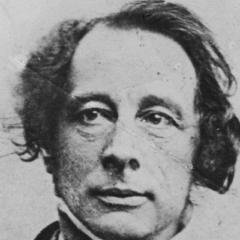
Charles Dickens
Charles Dickens

Charles Dickens, a British writer born on February 7, 1812, and died on June 9, 1870, is one of the greatest novelists of the 19th century. Known for his profound social criticism and vivid narrative style, Dickens' works extensively cover social reality, revealing various issues in the British society of the time. more

You May Also Like

“Thank you for writing so often. By doing so you give me a glimpse of yourself in the only way you can. I never get a letter from you without instantly feeling we’re together. If pictures of absent friends are a source of pleasure to us, refreshing the memory and relieving the sense of void with a solace however insubstantial and unreal, how much more so are letters, which carry marks and signs of an absent friend that are real. For the handwriting of a friend affords us what is so delightful about seeing him again, the sense of recognition.”

“But friendship isn't one of life's little luxuries. It's a necessity. To go through the world without the closest of friends is like walking it with a missing leg, with no crutch to be found when you need that support. Friends are the breath left to us when we run out of our own. They're the mirrors we need when we cannot see ourselves clearly. They point out our little flaws and, in times, the larger ones we must tend to. And, of course, they help us out of trouble as much as they help us into it. They are the truest form of reciprocation. You may think me callow for describing friendship in this way. That I demean friendship--make it seem like an exchange. But you are wrong. Friends are the ones willing and most able to give anything--everything when they can. And you do the same. It is never said. But it is the unspoken agreement in friendship. A reciprocation of feelings--actions. Of time. Which, I have learned over the course of my life, is an alternate way of spelling the word "love." People want time given to them--for them. For it's a kind of love the world is in all too short supply of. And for that, they will love you back. That is friendship.”

“Dear Joe, he is always right.” “Well, old chap,” said Joe, “then abide by your words. If he's always right (which in general he's more likely wrong), he's right when he says this:—Supposing ever you kep any little matter to yourself, when you was a little child, you kep it mostly because you know'd as J. Gargery's power to part you and Tickler in sunders, were not fully equal to his inclinations. Theerfore, think no more of it as betwixt two sech, and do not let us pass remarks upon onnecessary subjects. Biddy giv' herself a deal o' trouble with me afore I left (for I am almost awful dull), as I should view it in this light, and, viewing it in this light, as I should ser put it. Both of which,” said Joe, quite charmed with his logical arrangement, “being done, now this to you a true friend, say. Namely. You mustn't go a overdoing on it, but you must have your supper and your wine-and-water, and you must be put betwixt the sheets.” The delicacy with which Joe dismissed this theme, and the sweet tact and kindness with which Biddy—who with her woman's wit had found me out so soon—had prepared him for it, made a deep impression on my mind.”

“One of the most neglected virtues of our daily existence is appreciation. Somehow, we neglect to praise our son or daughter when he or she brings home a good report card, and we fail to encourage our children when they first succeed at baking a cake or building a birdhouse. Nothing pleases children more than this kind of parental interest and approval. The next time you enjoy a filet mignon at the club, send word to the chef that it was excellently prepared, and when a tired salesperson shows you unusual courtesy, please mention it. Every minister, lecturer and public speaker knows the discouragement of pouring himself or herself out to an audience and not receiving a single ripple of appreciative comment. What applies to professionals applies doubly to workers in offices, shops and factories and our families and friends. In our interpersonal relations we should never forget that all our associates are human beings and hunger for appreciation. It is the legal tender that all souls enjoy. Try leaving a friendly trail of little sparks of gratitude on your daily trips. You will be surprised how they will set small flames of friendship that will be rose beacons on your next visit.”