Quotessence
Home / Quotes / Quote by Gabrielle Zevin

Quote by Gabrielle Zevin

“I do not like postmodernism, postapocalyptic settings, postmortem narrators, or magic realism. I rarely respond to supposedly clever formal devices, multiple fonts, pictures where they shouldn't be—basically, gimmicks of any kind. I find literary fiction about the Holocaust or any other major world tragedy to be distasteful—nonfiction only, please. I do not like genre mash-ups à la the literary detective novel or the literary fantasy. Literary should be literary, and genre should be genre, and crossbreeding rarely results in anything satisfying. I do not like children's books, especially ones with orphans, and I prefer not to clutter my shelves with young adult. I do not like anything over four hundred pages or under one hundred fifty pages. I am repulsed by ghostwritten novels by reality television stars, celebrity picture books, sports memoirs, movie tie-in editions, novelty items, and—I imagine this goes without saying—vampires.”

Quote by Gabrielle Zevin

Work

The Storied Life of A.J. Fikry

Browse quotes and source details for this work. more

Author
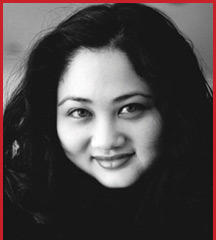
Gabrielle Zevin
Gabrielle Zevin

Gabrielle Zevin, born on October 24, 1977, is an American author whose works span across various genres, including novels, young adult literature, and adult fiction. She is admired for her unique narrative style and profound humanistic concerns. more

You May Also Like

“Dismissed like a dog. Damon groped for his jacket behind him, found it, and wished that his groping for his sense of humor could be as successful. The faces around him were all the same. They could have been carved in stone. But not stone as hard as that that was coming together again around his soul. That rock was remarkably quick to mend—and an extra layer was added, like the layering of a pearl, but not covering anything nearly so pretty.”

“Among the many worlds which man did not receive as a gift of nature, but which he created with his own mind, the world of books is the greatest. Every child, scrawling his first letters on his slate and attempting to read for the first time, in so doing, enters an artificial and complicated world; to know the laws and rules of this world completely and to practice them perfectly, no single human life is long enough. Without words, without writing, and without books there would be no history, there could be no concept of humanity. And if anyone wants to try to enclose in a small space in a single house or single room, the history of the human spirit and to make it his own, he can only do this in the form of a collection of books.”

“Now and then there are readings that make the hairs on the neck, the non-existent pelt, stand on end and tremble, when every word burns and shines hard and clear and infinite and exact, like stones of fire, like points of stars in the dark—readings when the knowledge that we shall know the writing differently or better or satisfactorily, runs ahead of any capacity to say what we know, or how. In these readings, a sense that the text has appeared to be wholly new, never before seen, is followed, almost immediately, by the sense that it was always there, that we the readers, knew it was always there, and have always known it was as it was, though we have now for the first time recognised, become fully cognisant of, our knowledge.”