Quotessence
Home / Quotes / Quote by Franz Kafka

Quote by Franz Kafka

“В дневнике находишь доказательства того, что даже в состояниях, которые сегодня кажутся невыносимыми, ты жил, смотрел вокруг и записывал свои наблюдения, что, таким образом, вот эта правая рука двигалась, как сегодня, когда ты благодаря возможности обозреть тогдашнее состояние, правда, поумнел, но с тем большим основанием ты должен признать бесстрашие своего тогдашнего стремления, сохранившегося, несмотря на полное неведение.”

Quote by Franz Kafka

Author
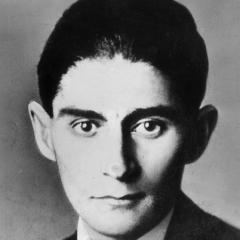
Franz Kafka
Franz Kafka

Franz Kafka (July 3, 1883 - June 3, 1924) was an important German-language novelist of the 20th century, known for his unique literary style and profound philosophical thoughts. His works, often themed around loneliness, alienation, and existentialism, have had a profound impact on literature and philosophy. more

You May Also Like

“We’re miserable because we think that we are mere individuals, alone with our fears and flaws and resentments and mortality. We wrongly believe that our limited little egos constitute our whole entire nature. We have failed to recognize our deeper divine character. We don’t realize that, somewhere within us all, there does exist a supreme Self who is eternally at peace. That supreme Self is our true identity, universal and divine. Before you realize this truth... you will always be in despair.”

“The man who refuses to judge, who neither agrees nor disagrees, who declares that there are no absolutes and believes that he escapes responsibility, is the man responsible for all the blood that is now spilled in the world. Reality is an absolute, existence is an absolute, a speck of dust is an absolute and so is a human life. Whether you live or die is an absolute. Whether you have a piece of bread or not, is an absolute. Whether you eat your bread or see it vanish into a looter's stomach, is an absolute. There are two sides to every issue: one side is right and the other is wrong, but the middle is always evil. The man who is wrong still retains some respect for truth, if only by accepting the responsibility of choice. But the man in the middle is the knave who blanks out the truth in order to pretend that no choice or values exist, who is willing to sit out the course of any battle, willing to cash in on the blood of the innocent or to crawl on his belly to the guilty, who dispenses justice by condemning both the robber and the robbed to jail, who solves conflicts by ordering the thinker and the fool to meet each other halfway. In any compromise between food and poison, it is only death that can win. In any compromise between good and evil, it is only evil that can profit. In that transfusion of blood which drains the good to feed the evil, the compromise is the transmitting rubber tube.”