Quotessence
Home / Quotes / Quote by Frank Herbert

Quote by Frank Herbert

“All persons act from beliefs they are conditioned not to question, from a set of deeply seated prejudices. Therefore, whoever presumes to judge must be asked: "How are you affronted?" And this judge must begin there to question inwardly as well as outwardly. — "The Question" from Ritual of the Courtarena Guide to Servants of the Box”

Quote by Frank Herbert

Work

The Dosadi Experiment

In 'The Dosadi Experiment,' the reader is transported to a futuristic society where genetic manipulation plays a pivotal role in politics and power struggles. The story delves into the complexities of a world where individuals are engineered for specific roles, and the protagonist navigates a treacherous landscape of political machinations and ethical dilemmas. more

Author
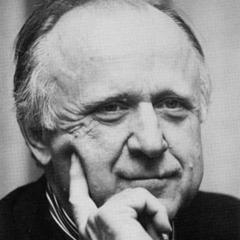
Frank Herbert
Frank Herbert

Frank Herbert, born on October 8, 1920, was an influential science fiction author from the United States. His masterpiece 'Dune' is considered a classic in the science fiction genre and has had a profound impact on literature and society. more

You May Also Like

“All rational beings laugh--and maybe only rational beings laugh. And all rational beings benefit from laughing. As a result there has emerged a peculiar human institution--that of the joke, the repeatable performance in words or gestures that is designed as an object of laughter. Now there is a great difficulty in saying exactly what laughter is. It is not just a sound--not even a sound, since it can be silent. Nor is it just a thought, like the thought of some object as incongruous. It is a response to something, which also involves a judgment of that thing. Moreover, it is not an individual peculiarity, like a nervous tic or a sneeze. Laughter is an expression of amusement, and amusement is an outwardly directly, socially pregnant state of mind. Laughter begins as a collective condition, as when children giggle together over some absurdity. And in adulthood amusements remains one of the ways in which human beings enjoy each other's company, become reconciled to their differences, and accept their common lot. Laughter helps us to overcome out isolation and fortifies us against despair. That does not mean that laughter is subjective in the sense that 'anything goes,' or that it is uncritical of its object. On the contrary, jokes are the object of fierce disputes, and many are dismissed as 'not funny,' 'in bad taste,' 'offensive,' and so on. The habit of laughing at things is not detachable from the habit of judging things to be worthy of laughter. Indeed, amusement, although a spontaneous outflow of social emotion, is also the most frequently practiced form of judgment. To laugh at something is already to judge it.”

“God is giving the world in the coronavirus outbreak, as in all other calamities, a physical picture of the moral horror and spiritual ugliness of God-belittling sin... Here’s my suggestion: God put the physical world under a curse so that the physical horrors we see around us in diseases and calamities would become a vivid picture of how horrible sin is. In other words, physical evil is a parable, a drama, a signpost pointing to the moral outrage of rebellion against God... Calamities are God’s previews of what sin deserves and will one day receive in judgment a thousand times worse. They are warnings. They are wake-up calls to see the moral horror and spiritual ugliness of sin against God.”

“We spend our lives trying to discern where we end and the rest of the world begins. We snatch our freeze-frame of life from the simultaneity of existence holding on to the illusions of permanence, congruence, and linearity; of static selves and lives that unfold in sensical narratives. All the while, we mistake chance for choice, our labels and models of things for the things themselves, our records for history. History is not what happened, but what survives the shipwrecks of judgment and chance.”