“Paralytic It happens. Will it go on? ---- My mind a rock, No fingers to grip, no tongue, My god the iron lung That loves me, pumps My two Dust bags in and out, Will not Let me relapse While the day outside glides by like ticker tape. The night brings violets, Tapestries of eyes, Lights, The soft anonymous Talkers: 'You all right?' The starched, inaccessible breast. Dead egg, I lie Whole On a whole world I cannot touch, At the white, tight Drum of my sleeping couch Photographs visit me ---- My wife, dead and flat, in 1920 furs, Mouth full of pearls, Two girls As flat as she, who whisper 'We're your daughters.' The still waters Wrap my lips, Eyes, nose and ears, A clear Cellophane I cannot crack. On my bare back I smile, a buddha, all Wants, desire Falling from me like rings Hugging their lights. The claw Of the magnolia, Drunk on its own scents, Asks nothing of life.”
Quote by Sylvia Plath
Work
Ariel is a captivating tale that delves into a richly imagined universe, following the journey of a protagonist as they navigate a world filled with magic and mystery. The story delves into themes of self-discovery and the quest for identity, all within an immersive narrative that blends elements of fantasy and adventure. more
Author
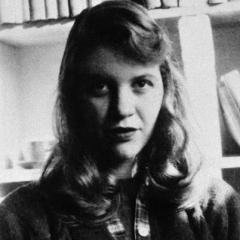
American poet, novelist, and playwright. Her works are known for their profound emotion and unique style, and she is considered one of the most important female writers of the 20th century. more
You May Also Like
“Mr. Watson — Come here — I want to see you. [First intelligible words spoken over the telephone]”
“man acīs cērt saule rokā guļ zvārgulītis bez mēles un es gaidu kad tajā iespers zibens”
“I have nowhere to go and no place I’m supposed to be. Am I lost or completely free?”