Quotessence
Home / Quotes / Quote by Jiddu Krishnamurti

Quote by Jiddu Krishnamurti

“Poverty becomes a marvellously beautiful thing when the mind is free of society. One must become poor inwardly for then there is no seeking, no asking, no desire, no - nothing! It is only this inward poverty that can see the truth of a life in which there is no conflict at all”

Quote by Jiddu Krishnamurti

Work

Freedom from the Known

Browse quotes and source details for this work. more

Author
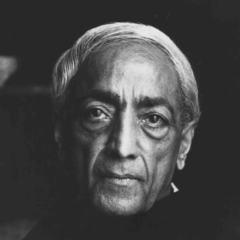
Jiddu Krishnamurti
Jiddu Krishnamurti

Jiddu Krishnamurti was an Indian philosopher, speaker, and writer who lived from May 12, 1895, to February 17, 1986. He is known for his teachings on the nature of the mind, consciousness, and the path to enlightenment. Krishnamurti emphasized the importance of self-inquiry and the transformation of consciousness, and his work has had a significant impact on individuals from various walks of life. more

You May Also Like

“Africa! Africa! Africa! Africa my motherland! Africa, your people cries for you! Africans must educate their citizens. Africans must reach out to it's people and empower them to build the nation. Africans you are the only people who can liberated your citizens from poverty through education. Africans must pay the price to rebuild the continent.”

“What in the name of reason does this nation expect of a people, poorly trained and hard pressed in severe economic competition, without political rights, and with ludicrously inadequate common-school facilities? What can it expect but crime and listlessness, offset here and there by the dogged struggles of the fortunate and more determined who are themselves buoyed by the hope that in due time the country will come to its senses?”

“Whenever governments wanted to achieve some end, often involving population growth, they restricted access to birth control and/or criminalized birth control unless, of course, the population growth concerned the poor, in which case, contraception was enthusiastically promoted. Historically, society has only wanted the "right kind of people" to have a right to life. We shouldn't forget that fact.”

“Dr. Kim couldn't remember the last time she'd seen a bowl of pure white rice. What was a bowl of rice doing there, just sitting out on the ground? She figured it out just before she heard the dog's bark. Up until that moment, a part of her had hoped that China would be just as poor as North Korea. She still wanted to believe that her country was the best place in the world. The beliefs she had cherished for a lifetime would be vindicated. But now she couldn't deny what was staring her plainly in the face: dogs in China ate better than doctors in North Korea.”

“Among this people there is no leisure class. We often forget that in the United States over half the youth and adults are not in the world earning incomes, but are making homes, learning of the world, or resting after the heat of the strife. But here ninety-six per cent are toiling; no one with leisure to turn the bare and cheerless cabin into a home, no old folks to sit beside the fire and hand down traditions of the past; little of careless happy childhood and dreaming youth.”