“It could be said that Borluut was in love with the town. But we only have one heart for all our loves, consequently his love was somewhat like the affection one feels for a woman, the devotion one entertains for a work of art, for a religion. He loved Bruges for its beauty and, like a lover, he would have loved it the more, the more beautiful it was. His passion had nothing to do with the local patriotism which unites those living in a town through habits, shared tastes, alliances, parochial pride. On the contrary, Borluut was almost solitary, kept himself apart, mingled little with the slow-witted inhabitants. Even out in the streets he scarcely saw the passers-by. As a solitary wanderer, he began to favour the canals, the weeping trees, the tunnel bridges, the bells he could sense in the air, the old walls of the old districts. Instead of living beings, his interest focused on things. The town took on a personality, became almost human. He loved It, wished to embellish it, to adorn its beauty, a beauty mysterious in its sadness. And, above all, so unostentatious. Other towns are showy, amassing palaces, terraced gardens, fine geometrical monuments. Here everything was muted, nuanced. Storiated architecture, facades like reliquaries, stepped gables, trefoil doors and windows, ridges crowned with finials, mouldings, gargoyles, bas-reliefs - incessant surprises making the town into a kind of complex landscape of stone. It was a mixture of Gothic and Renaissance, that sinuous transition which suddenly draws out forms that are too rigid and too bare in supple, flowing lines. It was if an unexpected spring had sprouted on the walls, as if they had been transubstantiated by a dream - all at once there were faces and bunches of flowers on them. This blossoming on the facades had lasted until the present, blackened by the ravages of time, abiding but already blurred.”
Quote by Georges Rodenbach
Book:The Bells of Bruges
Work
The Bells of Bruges
The Bells of Bruges is a historical fiction novel that delves into the life of a character living in the picturesque city of Bruges. The story weaves through the complexities of human emotions, focusing on the protagonist's journey through love and loss amidst the backdrop of a changing world. more
Author
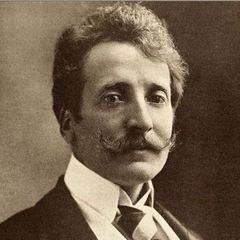
Georges Rodenbach
Georges Rodenbach was a Belgian poet known for his unique symbolism and profound emotional expression. His works often explore themes of human existence, with deep insights into love, death, and nature. more
You May Also Like
Source: The Bells of Bruges
Source: The Devil's Missal
“So don't you worry your pretty little mind, people throw rocks at things that shine”
Source: Speak Now 2011-12 Tour Book
Source: Clothes, Clothes, Clothes. Music, Music, Music. Boys, Boys, Boys
Source: We Are One
Source: Cartels in Action: Case Studies in International Business Diplomacy
Source: Czasy secondhand. Koniec czerwonego człowieka
“El descobriment dels diners va ser com l’explosió d’una bomba atòmica.”
Source: Czasy secondhand. Koniec czerwonego człowieka