Quotessence
Home / Authors / Georges Rodenbach
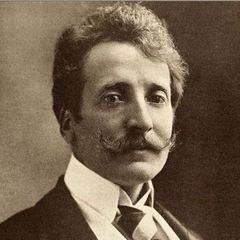
Georges Rodenbach

Georges Rodenbach Quotes

Poet

Filter quotes by topic

Famous Georges Rodenbach Quotes

“Now they came, spectres in mourning, humbling themselves, ghosts, their eyes the only points of brightness. It was harrowing: a long cortege of shadows. This time silence had come flooding in. Not a sound, not a cry. A silence all the more sinister for being black. There is the white silence of the Beguines' workrooms; it is sweet. Here was a black silence that strikes terror to the heart, slipping past like water, as full of pitfalls as the night. At first all that could be made out was a tangle of crosses, all the raised arms of the crosses of a graveyard. All with their dead.”

“He mostly preached in the evening, when the college church was already shrouded in shadow. And he chose subjects that filled the imagination with salutary fear—sin, Hell, death—painting pictures that were sometimes cajoling, more often harrowing, evoking the effects of the fire on the damned. The little group of pupils listened, apprehensive, sometimes terrified, a distraught flock whose black shepherd is gesticulating towards distant flames.”

“As he made his way back to his home on the Dijver, along the canals, beside the calm waters, Borluut felt his regret, his remorse at having divulged his worries grow at the sight of the noble swans, sealed-in snow, which, prisoners of the canals, prey to the rain, the sadness of the bells, the shadow of the gables, have the modesty to remain silent and only complain, with a voice that is almost human, when they are about to die...”

“He got carried away as he developed his idea: 'The aesthetic quality of towns is essential. If, as has been said, every landscape is a frame of mind, then it is even more true of a townscape. The way the inhabitants think and feel corresponds to the town they live in. An analogous phenomenon can be observed in certain women who, during their pregnancy, surround themselves with harmonious objects, calm statues, bright gardens, delicate curios, so that their child-to-be, under their influence, will be beautiful. In the same way one cannot imagine a genius coming from other than a magnificent town. Goethe was born in Frankfurt, a noble city where the Main flows between venerable palaces, between walls where the ancient heart of Germany lives on. Hoffmann explains Nuremberg - his soul performs acrobatics on the gables like a gnome on the decorated face of an old German clock. In France there is Rouen, with its rich accumulation of architectural monuments, its. cathedral like an oasis of stone, which produced Corneille and then Flaubert, two pure geniuses shaking hands across the centuries. There is no doubt about it, beautiful towns make beautiful souls.”

“It was van Hulle who had been the initiator of this restoration of their ancestral language to its former glory as a means of reawakening national consciousness. He had called conferences and incited a vast number of people to petition the authorities. He was truly the first apostle of the Movement, to which people like Borluut, Farazyn and Bartholomeus had rallied. Now the drive was slackening. None of their hopes had been realised, apart from the use of the Flemish language. And now that point had been conceded, they saw that it had not produced any important changes for Bruges. At most it was as if a dead body had been put in a different coffin.”

“The crowd listened all the more closely for having waited and despaired, especially since this time the bells, ringing softly, demanded a deeper hush. The prelude was muted, a blend in which one could no longer distinguish bells alternating then coming together, it was a concert of bronze united, as if far off and very old. Music in a dream! It did not come from the tower, but from much farther away, from the depths of the sky, from the depths of time. This carillonneur had had the idea of playing some old Christmas carols, Flemish carols born of the race, mirrors in which it recognises itself. Like everything that has passed through the centuries, it was very solemn and a little sad.”

“Then he returned to his theme: 'If so many lovers feel the desire to die and more and more die each day, while still in love, it is because love and death are linked by analogies, by underground passages, and communicate. One leads to the other. The one makes the other more acute, more intense. There is no doubt that death is a great stimulant of love. ("Love And Death")”

“He was still climbing. Here and there doors opened revealing vast rooms, dormitories with heavy joists where bells were sleeping. A vague feeling stirred within Borluut as he went over to them. They were not entirely at rest,just as virgins are never completely at rest. Their sleep was visited by dreams. He felt as if they were about to move, stretch, moan like sleepwalkers. The incessant murmuring among the bells! A noise that persists, like the sound of the sea in shells! They never empty themselves entirely. Sound forming like beads of sweat! A condensation of music on the bronze...”

“Even during the nights, their nights punctuated by unending kisses, they were sometimes irritated by the carillon, which sounded every quarter of an hour from the top of the belfry opposite. A slow, indistinct jingling which seemed to come from far, far away, from the depths of childhood, from the depths of the ages. It was like a dead bouquet falling, an autumn of sound shedding its leaves over the town. ("The Dead Town")”

“Bartholomeus went on, 'I wanted to show that these objects are sensitive, suffer at the coming of night, faint at the departure of the last rays, which, by the way, also live in this room; they suffer as much, they fight against the darkness. There you have it. It's the life of things, if you like. The French would call it a nature morte, a picture of inanimate objects. That is not what I'm trying to show. Flemish puts it better: a still life.”

“Dead towns are the Cathedrals of Silence. They, too, have their gargoyles, singular figures, exaggerated, dubious, set in high profile. They stand out from the mass of grey, which takes all it has in the way of character, its twitchings of stagnant life from them. Some have been distorted by solitude, others grimace with a directionless fervour; here there are masks of cherished lust, there faces ceaselessly sculpted and furrowed by mysticism. Human gargoyles, the only figures of interest in this monotonous population.”

“Bruges had the air of a ghost town. The high towers, the trees along the canals withdrew, absorbed by the same muslin: impenetrable fog with not a single rift. Even the carillon seemed to have to escape, to force its way out of a prison yard filled with cotton wool to be free in the air, to reach the gables over which, every quarter of an hour, the bells poured, like falling leaves, a melancholy autumn of music.”

“The carillon is, after all, the music of the people. Elsewhere, in the glittering capitals, public festivals are celebrated with fireworks, that magical offering that can thrill the very soul. Here, in the meditative land of Flanders, among the damp mists so antagonistic to the brilliance of fire, the carillon takes their place. It is a display of fireworks that one hears: flares, rockets, showers, a thousand sparks of sound which colour the air for visionary eyes alerted by hearing.”

“Was that not the way it ought to be? The beauty of Bruges lay in being dead. From the top of the belfry it appeared completely dead to Borluut. He did not want to go back down ever again. His love for the town was greater, was endless. From now on it was a kind of frenzy, his final sensual pleasure. Constantly climbing high above the world, he started to enjoy death. There is danger in rising too high, into the unbreathable air of the summits. Disdain for the world, for life itself brings its own punishment.”

“Now Borluut was seeing it from close to. And to its very end, it seemed, from the way the line of the horizon merged into the infinite. It was bare. Not one ship. It ground out a dirge, in a glaucous tone, opaque, uniform. One sensed that all the colours were below, but faded. At the edge, the waves spilling onto the shore made a sound of washerwomen beating sheets of white linen, a whole supply of shrouds for future storms.”

“Once he had reached the top, he looked down on the town at his feet. Such repose, such tranquility, what a lesson in calmness! Seeing it, he was ashamed of his troubled existence. He renounced the love that brought him misery for the love of the town. It took hold of him again, suffusing his entire being as it had done during the first days of the Flemish Movement. How beautiful Bruges still was, seen from above, with its belfries, its pinnacles, its stepped gables like stairs to climb up to the land of dreams, to return to the great days of yesteryear. Among the roofs were canals fanned by the trees, quiet streets with a few women making their way in cloaks, swinging like silent bells. Lethargic peace! The sweetness of renunciation! A queen in exile, the widow of History whose only desire, basically, was to carve her own tomb.”

“In Bruges he had carried out a work which was anonymous and brought no glory, but was seen as admirable once it had been understood. He was the embalmer of the town. Being dead, it would have decomposed, disintegrated. He had mummified it in the bandages of its inert waters, its regular columns of smoke, with the gilding and polychrome decoration on the facades like gold and unguents on nails and teeth; and the lily of Memling across the corpse, like the ancient lotus on the virgins of Egypt. It was thanks to him that the town stood triumphant and beautiful in the adornment of death. In that garb it would be eternal, no less than the mummies themselves, eternally in funeral finery, which has nothing sad about it, since it has transformed death into a work of art.”

“It could be said that Borluut was in love with the town. But we only have one heart for all our loves, consequently his love was somewhat like the affection one feels for a woman, the devotion one entertains for a work of art, for a religion. He loved Bruges for its beauty and, like a lover, he would have loved it the more, the more beautiful it was. His passion had nothing to do with the local patriotism which unites those living in a town through habits, shared tastes, alliances, parochial pride. On the contrary, Borluut was almost solitary, kept himself apart, mingled little with the slow-witted inhabitants. Even out in the streets he scarcely saw the passers-by. As a solitary wanderer, he began to favour the canals, the weeping trees, the tunnel bridges, the bells he could sense in the air, the old walls of the old districts. Instead of living beings, his interest focused on things. The town took on a personality, became almost human. He loved It, wished to embellish it, to adorn its beauty, a beauty mysterious in its sadness. And, above all, so unostentatious. Other towns are showy, amassing palaces, terraced gardens, fine geometrical monuments. Here everything was muted, nuanced. Storiated architecture, facades like reliquaries, stepped gables, trefoil doors and windows, ridges crowned with finials, mouldings, gargoyles, bas-reliefs - incessant surprises making the town into a kind of complex landscape of stone. It was a mixture of Gothic and Renaissance, that sinuous transition which suddenly draws out forms that are too rigid and too bare in supple, flowing lines. It was if an unexpected spring had sprouted on the walls, as if they had been transubstantiated by a dream - all at once there were faces and bunches of flowers on them. This blossoming on the facades had lasted until the present, blackened by the ravages of time, abiding but already blurred.”

“Wilhelmine chatted on, chatted as if emboldened by the gathering dusk. She wasn't afraid any more. She didn't blush any more. And in this chatter without lamplight the dark seemed to suffuse her words as well. Her voice deepened. Darkness can have a strange influence. It has something religious about it and makes one speak in a low voice, as if in a church.”