Quotessence
Home / Quotes / Quote by Georges Rodenbach

Quote by Georges Rodenbach

“As he made his way back to his home on the Dijver, along the canals, beside the calm waters, Borluut felt his regret, his remorse at having divulged his worries grow at the sight of the noble swans, sealed-in snow, which, prisoners of the canals, prey to the rain, the sadness of the bells, the shadow of the gables, have the modesty to remain silent and only complain, with a voice that is almost human, when they are about to die...”

Quote by Georges Rodenbach

Work

The Bells of Bruges

The Bells of Bruges is a historical fiction novel that delves into the life of a character living in the picturesque city of Bruges. The story weaves through the complexities of human emotions, focusing on the protagonist's journey through love and loss amidst the backdrop of a changing world. more

Author

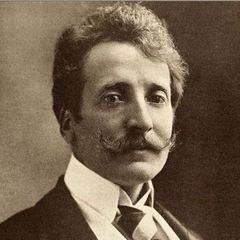
Georges Rodenbach
Georges Rodenbach

Georges Rodenbach was a Belgian poet known for his unique symbolism and profound emotional expression. His works often explore themes of human existence, with deep insights into love, death, and nature. more

You May Also Like

“Swan, my mother said, sensing my excitement. It pattered the bright water, flapping its great wings, and lifted into the sky. The word alone hardly attested to its magnificence nor conveyed the emotion it produced. The sight of it generated an urge I had no words for, a desire to speak of the swan, to say something of its whiteness, the explosive nature of its movement, and the slow beating of its wings. The swan became one with the sky. I struggled to find words to describe my own sense of it. Swan, I repeated, not entirely satisfied, and I felt a twinge, a curious yearning, imperceptible to passersby, my mother, the trees, or the clouds.”

“My very first necklace, from my grandmother, had a swan pendant. Now, as an adult, I do still wear a swan pendant and it's my favourite one. I have been on dates wearing it and always get the same comment: "Did you know that swans may look graceful and elegant but they can break your arms with their wings?" They always say it like it's a bad thing. I think it's one of the most fantastic things in nature!”

“My thoughts swerve back to swans' eggs. Such splendid things---their whites are purer, more translucent than those of any other egg. Perhaps their boiled yolks might be mixed with firm fresh butter, essence of anchovies, minced herbs, even a chopped shallot. And then returned to their hardboiled whites in softly beaten mounds. A swan's egg en salade, I think, smiling.”

“Youngest Brother, swan's wing, where one arm should be, yours the shirt of nettles short a sleeve and me with no time left to finish -- I didn't mend you all the way back into man though I managed for your brothers; they flit again from court to playing-courts to courting, while you station yourself, wing folded from sight, avian eye to the outside, no rebuke meant but love's. Was it better then, the living on the water, the taking to air...? ("Ever After," from the book 'The Poets' Grimm')”

“Ella woke again as they entered the picturesque village of Bibury. A stone bridge arched over the placid River Coln, and Ella craned her neck to watch a swan and its fuzzy, brown cygnets floating alongside beds of watercress and the boggy watermeadow called Rack Isle. Ella lifted her phone and snapped a picture. "It's like someone cued them." "I called ahead." They drove past a row of sandstone cottages with colorful gardens, and in the center of town, Heather pointed out the ancient Saxon church. "St. Mary's was on a Christmas stamp a few decades back." Ella rolled down her window to take another picture. "It's all so- so perfect.”

“The fresco on one large wall was indeed the marvel Julian had promised. It was a Pre-Raphaelite portrayal of the Children of Lir, those four siblings cursed to remain swans for nine hundred years. Despite a ragged crack that was making its way down the plaster, the fresco was as pulsing with life as though one was actually looking out on a placid freshwater lake. When Marjan turned away from the painted wall, she saw its real-life inspiration outside the window. There, through floor-length panes, stood a pond complete with a flock of those gracious birds, the white-necked swans.”