Quotessence
Home / Quotes / Quote by Georges Rodenbach

Quote by Georges Rodenbach

“Was that not the way it ought to be? The beauty of Bruges lay in being dead. From the top of the belfry it appeared completely dead to Borluut. He did not want to go back down ever again. His love for the town was greater, was endless. From now on it was a kind of frenzy, his final sensual pleasure. Constantly climbing high above the world, he started to enjoy death. There is danger in rising too high, into the unbreathable air of the summits. Disdain for the world, for life itself brings its own punishment.”

Quote by Georges Rodenbach

Work

The Bells of Bruges

The Bells of Bruges is a historical fiction novel that delves into the life of a character living in the picturesque city of Bruges. The story weaves through the complexities of human emotions, focusing on the protagonist's journey through love and loss amidst the backdrop of a changing world. more

Author

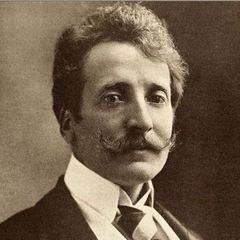
Georges Rodenbach
Georges Rodenbach

Georges Rodenbach was a Belgian poet known for his unique symbolism and profound emotional expression. His works often explore themes of human existence, with deep insights into love, death, and nature. more

You May Also Like

“Now Borluut was seeing it from close to. And to its very end, it seemed, from the way the line of the horizon merged into the infinite. It was bare. Not one ship. It ground out a dirge, in a glaucous tone, opaque, uniform. One sensed that all the colours were below, but faded. At the edge, the waves spilling onto the shore made a sound of washerwomen beating sheets of white linen, a whole supply of shrouds for future storms.”

“Once he had reached the top, he looked down on the town at his feet. Such repose, such tranquility, what a lesson in calmness! Seeing it, he was ashamed of his troubled existence. He renounced the love that brought him misery for the love of the town. It took hold of him again, suffusing his entire being as it had done during the first days of the Flemish Movement. How beautiful Bruges still was, seen from above, with its belfries, its pinnacles, its stepped gables like stairs to climb up to the land of dreams, to return to the great days of yesteryear. Among the roofs were canals fanned by the trees, quiet streets with a few women making their way in cloaks, swinging like silent bells. Lethargic peace! The sweetness of renunciation! A queen in exile, the widow of History whose only desire, basically, was to carve her own tomb.”

“During the Society's early years, no member personified the organization's eccentricities or audacious mission more than Sir Francis Galton. A cousin of Charles Darwin's, he had been a child prodigy who, by the age of four, could read and recite Latin. He went on to concoct myriad inventions. They included a ventilating top hat; a machine called a Gumption-Reviver, which periodically wet his head to keep him awake during endless study; underwater goggles; and a rotating-vane steam engine. Suffering from periodic nervous breakdowns––"sprained brain," as he called it––he had a compulsion to measure and count virtually everything. He quantified the sensitivity of animal hearing, using a walking stick that could make an inconspicuous whistle; the efficacy of prayer; the average age of death in each profession (lawyers: 66.51; doctors: 67.04); the exact amount of rope needed to break a criminal's neck while avoiding decapitation; and levels of boredom (at meetings of the Royal Geographical Society he would count the rate of fidgets among each member of the audience).”

“In Bruges he had carried out a work which was anonymous and brought no glory, but was seen as admirable once it had been understood. He was the embalmer of the town. Being dead, it would have decomposed, disintegrated. He had mummified it in the bandages of its inert waters, its regular columns of smoke, with the gilding and polychrome decoration on the facades like gold and unguents on nails and teeth; and the lily of Memling across the corpse, like the ancient lotus on the virgins of Egypt. It was thanks to him that the town stood triumphant and beautiful in the adornment of death. In that garb it would be eternal, no less than the mummies themselves, eternally in funeral finery, which has nothing sad about it, since it has transformed death into a work of art.”

“It could be said that Borluut was in love with the town. But we only have one heart for all our loves, consequently his love was somewhat like the affection one feels for a woman, the devotion one entertains for a work of art, for a religion. He loved Bruges for its beauty and, like a lover, he would have loved it the more, the more beautiful it was. His passion had nothing to do with the local patriotism which unites those living in a town through habits, shared tastes, alliances, parochial pride. On the contrary, Borluut was almost solitary, kept himself apart, mingled little with the slow-witted inhabitants. Even out in the streets he scarcely saw the passers-by. As a solitary wanderer, he began to favour the canals, the weeping trees, the tunnel bridges, the bells he could sense in the air, the old walls of the old districts. Instead of living beings, his interest focused on things. The town took on a personality, became almost human. He loved It, wished to embellish it, to adorn its beauty, a beauty mysterious in its sadness. And, above all, so unostentatious. Other towns are showy, amassing palaces, terraced gardens, fine geometrical monuments. Here everything was muted, nuanced. Storiated architecture, facades like reliquaries, stepped gables, trefoil doors and windows, ridges crowned with finials, mouldings, gargoyles, bas-reliefs - incessant surprises making the town into a kind of complex landscape of stone. It was a mixture of Gothic and Renaissance, that sinuous transition which suddenly draws out forms that are too rigid and too bare in supple, flowing lines. It was if an unexpected spring had sprouted on the walls, as if they had been transubstantiated by a dream - all at once there were faces and bunches of flowers on them. This blossoming on the facades had lasted until the present, blackened by the ravages of time, abiding but already blurred.”