Quotessence
Home / Quotes / Quote by Georges Rodenbach

Quote by Georges Rodenbach

“In Bruges he had carried out a work which was anonymous and brought no glory, but was seen as admirable once it had been understood. He was the embalmer of the town. Being dead, it would have decomposed, disintegrated. He had mummified it in the bandages of its inert waters, its regular columns of smoke, with the gilding and polychrome decoration on the facades like gold and unguents on nails and teeth; and the lily of Memling across the corpse, like the ancient lotus on the virgins of Egypt. It was thanks to him that the town stood triumphant and beautiful in the adornment of death. In that garb it would be eternal, no less than the mummies themselves, eternally in funeral finery, which has nothing sad about it, since it has transformed death into a work of art.”

Quote by Georges Rodenbach

Work

The Bells of Bruges

The Bells of Bruges is a historical fiction novel that delves into the life of a character living in the picturesque city of Bruges. The story weaves through the complexities of human emotions, focusing on the protagonist's journey through love and loss amidst the backdrop of a changing world. more

Author
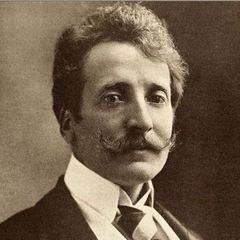
Georges Rodenbach
Georges Rodenbach

Georges Rodenbach was a Belgian poet known for his unique symbolism and profound emotional expression. His works often explore themes of human existence, with deep insights into love, death, and nature. more

You May Also Like

“It could be said that Borluut was in love with the town. But we only have one heart for all our loves, consequently his love was somewhat like the affection one feels for a woman, the devotion one entertains for a work of art, for a religion. He loved Bruges for its beauty and, like a lover, he would have loved it the more, the more beautiful it was. His passion had nothing to do with the local patriotism which unites those living in a town through habits, shared tastes, alliances, parochial pride. On the contrary, Borluut was almost solitary, kept himself apart, mingled little with the slow-witted inhabitants. Even out in the streets he scarcely saw the passers-by. As a solitary wanderer, he began to favour the canals, the weeping trees, the tunnel bridges, the bells he could sense in the air, the old walls of the old districts. Instead of living beings, his interest focused on things. The town took on a personality, became almost human. He loved It, wished to embellish it, to adorn its beauty, a beauty mysterious in its sadness. And, above all, so unostentatious. Other towns are showy, amassing palaces, terraced gardens, fine geometrical monuments. Here everything was muted, nuanced. Storiated architecture, facades like reliquaries, stepped gables, trefoil doors and windows, ridges crowned with finials, mouldings, gargoyles, bas-reliefs - incessant surprises making the town into a kind of complex landscape of stone. It was a mixture of Gothic and Renaissance, that sinuous transition which suddenly draws out forms that are too rigid and too bare in supple, flowing lines. It was if an unexpected spring had sprouted on the walls, as if they had been transubstantiated by a dream - all at once there were faces and bunches of flowers on them. This blossoming on the facades had lasted until the present, blackened by the ravages of time, abiding but already blurred.”

“Real life is a funny thing, you know. In real life, saying the right thing, at the right moment is beyond crucial. So crucial in fact, that most of us start to hesitate, for fear of saying the wrong thing, at the wrong time. But lately what I've begun to fear more than that, is letting the moment pass without saying anything. I think you deserve to look back on your life without this chorus of resounding voices saying "I could've" but it's too late now. So there's a time for silence, and there's a time for waiting your turn. But if you know how you feel and you so clearly know what you need to say, you'll know it. I don't think you should wait. I think you should speak now.”

“I’ve never regretted letting someone go who was taking the piss, although sometimes I miss them for a couple of months. I think you can get a bit addicted to people and often these piss-takers are good fun to hang around with. In the end, the ‘relationship’ isn’t worth the damage that’s done to your self-respect, though.”