Quotessence
Home / Quotes / Quote by Georges Rodenbach

Quote by Georges Rodenbach

“Bartholomeus went on, 'I wanted to show that these objects are sensitive, suffer at the coming of night, faint at the departure of the last rays, which, by the way, also live in this room; they suffer as much, they fight against the darkness. There you have it. It's the life of things, if you like. The French would call it a nature morte, a picture of inanimate objects. That is not what I'm trying to show. Flemish puts it better: a still life.”

Quote by Georges Rodenbach

Work

The Bells of Bruges

The Bells of Bruges is a historical fiction novel that delves into the life of a character living in the picturesque city of Bruges. The story weaves through the complexities of human emotions, focusing on the protagonist's journey through love and loss amidst the backdrop of a changing world. more

Author

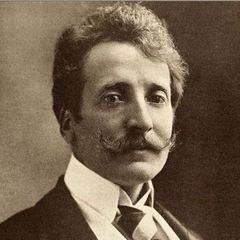
Georges Rodenbach
Georges Rodenbach

Georges Rodenbach was a Belgian poet known for his unique symbolism and profound emotional expression. His works often explore themes of human existence, with deep insights into love, death, and nature. more

You May Also Like

“Worte sind die blassen Schatten vergessener Namen. Und wie Namen Macht innewohnt, wohnt auch Worten Macht inne. Mit Worten kann man im Geist der Menschen Feuer entfachen. Mit Worten kann man selbst dem hartherzigsten Menschen Tränen entlocken. Es gibt sieben Worte, die einen Menschen dazu bringen, dich zu lieben. Und es gibt zehn Worte, mit denen man den Willen selbst des stärksten Mannes brechen kann. Aber ein Wort ist weiter nichts als die bildliche Darstellung eines Feuers. Ein Name ist das Feuer selbst.”

“Also there were people going round in such clumsy ways, stopping and starting, and hordes of schoolchildren like the ones I used to keep in order. Why so many of them and so idiotic with their yelps and yells and the redundancy, the sheer un-necessity of their existence, Everywhere an insult in your face. As the shops and their signs were an insult, and the noise of the cars with their stops and starts. Everywhere the proclaiming, this is life. As if we needed, more of life.”

“Indeed, to understand how the abstrusest metaphysical assertions of a philosopher have been arrived at, it is always well (and wise) to first ask oneself: ‘What morality do they (or does he) aim at?’ Accordingly, I do not believe that an ‘impulse to knowledge’ is the father of philosophy; but that another impulse, here as elsewhere, has only made use of knowledge (and mistaken knowledge!) as an instrument. But whoever considers the fundamental impulses of man with a view to determining how far they may have here acted as inspiring genii (or as demons and cobolds), will find that they have all practiced philosophy at one time or another, and that each one of them would have been only too glad to look upon itself as the ultimate end of existence and the legitimate lord over all the other impulses. For every impulse is imperious and, as such, attempts to philosophize.”

“Orthodoxy is the wide open field within which successful breeding can take place. If one maintains that Jesus was an eater of magic mushrooms or a Martian, then this will not make for fertility. There is not enough in common for there to be intercourse in any sense. How different can two believers be for the encounter to be fertile? This is a complex question which we do not need to explore here. Of course ultimately we must share orthodoxy, but this is not to narrow the scope of the conversation; it is to enter the broad terrain of the mystery, in which we are liberated from the tightness of ideology. It is a serious misuse of language to use the word 'orthodox' to mean conservative or, even worse, rigid. Orthodoxy does not lie in the unvarying and thoughtless repetition of received formulas. As Karl Rahner pointed out, that can be a form of heresy. Orthodoxy is speaking about our faith in ways that keep open the pilgrimage towards the mystery. Often it is hard to know immediately whether a new statement of belief is a new way of stating our faith or its betrayal. It takes time for us to tell.”