Quotessence
Home / Quotes / Quote by Friedrich Nietzsche

Quote by Friedrich Nietzsche

“Indeed, to understand how the abstrusest metaphysical assertions of a philosopher have been arrived at, it is always well (and wise) to first ask oneself: ‘What morality do they (or does he) aim at?’ Accordingly, I do not believe that an ‘impulse to knowledge’ is the father of philosophy; but that another impulse, here as elsewhere, has only made use of knowledge (and mistaken knowledge!) as an instrument. But whoever considers the fundamental impulses of man with a view to determining how far they may have here acted as inspiring genii (or as demons and cobolds), will find that they have all practiced philosophy at one time or another, and that each one of them would have been only too glad to look upon itself as the ultimate end of existence and the legitimate lord over all the other impulses. For every impulse is imperious and, as such, attempts to philosophize.”

Quote by Friedrich Nietzsche

Author
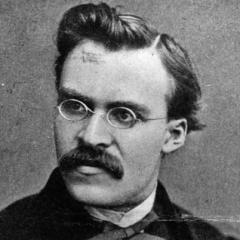
Friedrich Nietzsche
Friedrich Nietzsche

Friedrich Nietzsche was a German philosopher, cultural critic, poet, and writer whose works have had a profound impact on subsequent philosophy, literature, and thought. His ideas revolve around concepts such as the 'will to power', the 'Übermensch', and the 'eternal recurrence'. more

You May Also Like

“Orthodoxy is the wide open field within which successful breeding can take place. If one maintains that Jesus was an eater of magic mushrooms or a Martian, then this will not make for fertility. There is not enough in common for there to be intercourse in any sense. How different can two believers be for the encounter to be fertile? This is a complex question which we do not need to explore here. Of course ultimately we must share orthodoxy, but this is not to narrow the scope of the conversation; it is to enter the broad terrain of the mystery, in which we are liberated from the tightness of ideology. It is a serious misuse of language to use the word 'orthodox' to mean conservative or, even worse, rigid. Orthodoxy does not lie in the unvarying and thoughtless repetition of received formulas. As Karl Rahner pointed out, that can be a form of heresy. Orthodoxy is speaking about our faith in ways that keep open the pilgrimage towards the mystery. Often it is hard to know immediately whether a new statement of belief is a new way of stating our faith or its betrayal. It takes time for us to tell.”

“What is it, she asks me, why do people cry? Why do we cry when we're happy and when we're sad or hurt? I tell her what I know or think I know: that the body does not distinguish between emotional and physical pain; the muscles around the lachrymal glands receive a message from the brain, then tighten and squeeze out tears. Tears contain high levels of the hormone ACTH and prolactin, endorphins (which we know are mood-altering and pain-killing), as well as thirty times more manganese than is found in blood, suggesting that human tears can concentrate and remove harmful substances from the body. Prolactin in humans controls fluid balance; by the age of eighteen women have 60 percent more prolactin than men, which may explain why women seem to cry more often. I tell her that sadness--like happiness--is an intense feeling of being alive, of having essence. I try to explain to her my own nonscientific theory: that crying is about weight or heft, that we cry when our bodies feel too light or too heavy to bear or hold on to language.”

“There is a being with a thousand heads, a thousand eyes and a thousand feet. He surrounds the earth from all directions, he surrounds the universe from all directions, and yet there is more of him that is left over. This being is divided into four parts. Three of these parts exist in lofty places and the fourth part is manifested on earth. This fourth part embraces the four directions on earth. All beings who have been born and all beings who will be born are manifestations of this being. Three parts of the being are immortal and exist in heaven, and the fourth part sustains all objects on earth. This being is the lord of immortality and of food grains. He is supreme; he is the one who created the earth.”

“As we saw in the last chapter, the dreams have a double meaning: They are the dreams that announce the birth of a universal emperor, but they also announce the birth of a Tirthankar. In other words, a Tirthankar is one who might have been an earthly king but became an ascetic instead. In this connection, it is important to note that a Tirthankar-to-be is always born into a family belonging to the Kshatriya varna, the social class of warriors and kings.”