Quotessence
Home / Quotes / Quote by Georges Rodenbach

Quote by Georges Rodenbach

“Dead towns are the Cathedrals of Silence. They, too, have their gargoyles, singular figures, exaggerated, dubious, set in high profile. They stand out from the mass of grey, which takes all it has in the way of character, its twitchings of stagnant life from them. Some have been distorted by solitude, others grimace with a directionless fervour; here there are masks of cherished lust, there faces ceaselessly sculpted and furrowed by mysticism. Human gargoyles, the only figures of interest in this monotonous population.”

Quote by Georges Rodenbach

Work

The Bells of Bruges

The Bells of Bruges is a historical fiction novel that delves into the life of a character living in the picturesque city of Bruges. The story weaves through the complexities of human emotions, focusing on the protagonist's journey through love and loss amidst the backdrop of a changing world. more

Author

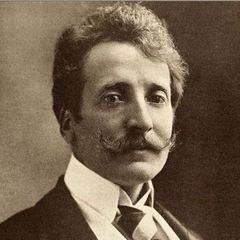
Georges Rodenbach
Georges Rodenbach

Georges Rodenbach was a Belgian poet known for his unique symbolism and profound emotional expression. His works often explore themes of human existence, with deep insights into love, death, and nature. more

You May Also Like

“Bruges had the air of a ghost town. The high towers, the trees along the canals withdrew, absorbed by the same muslin: impenetrable fog with not a single rift. Even the carillon seemed to have to escape, to force its way out of a prison yard filled with cotton wool to be free in the air, to reach the gables over which, every quarter of an hour, the bells poured, like falling leaves, a melancholy autumn of music.”

“The carillon is, after all, the music of the people. Elsewhere, in the glittering capitals, public festivals are celebrated with fireworks, that magical offering that can thrill the very soul. Here, in the meditative land of Flanders, among the damp mists so antagonistic to the brilliance of fire, the carillon takes their place. It is a display of fireworks that one hears: flares, rockets, showers, a thousand sparks of sound which colour the air for visionary eyes alerted by hearing.”

“Was that not the way it ought to be? The beauty of Bruges lay in being dead. From the top of the belfry it appeared completely dead to Borluut. He did not want to go back down ever again. His love for the town was greater, was endless. From now on it was a kind of frenzy, his final sensual pleasure. Constantly climbing high above the world, he started to enjoy death. There is danger in rising too high, into the unbreathable air of the summits. Disdain for the world, for life itself brings its own punishment.”

“Now Borluut was seeing it from close to. And to its very end, it seemed, from the way the line of the horizon merged into the infinite. It was bare. Not one ship. It ground out a dirge, in a glaucous tone, opaque, uniform. One sensed that all the colours were below, but faded. At the edge, the waves spilling onto the shore made a sound of washerwomen beating sheets of white linen, a whole supply of shrouds for future storms.”

“Once he had reached the top, he looked down on the town at his feet. Such repose, such tranquility, what a lesson in calmness! Seeing it, he was ashamed of his troubled existence. He renounced the love that brought him misery for the love of the town. It took hold of him again, suffusing his entire being as it had done during the first days of the Flemish Movement. How beautiful Bruges still was, seen from above, with its belfries, its pinnacles, its stepped gables like stairs to climb up to the land of dreams, to return to the great days of yesteryear. Among the roofs were canals fanned by the trees, quiet streets with a few women making their way in cloaks, swinging like silent bells. Lethargic peace! The sweetness of renunciation! A queen in exile, the widow of History whose only desire, basically, was to carve her own tomb.”

“During the Society's early years, no member personified the organization's eccentricities or audacious mission more than Sir Francis Galton. A cousin of Charles Darwin's, he had been a child prodigy who, by the age of four, could read and recite Latin. He went on to concoct myriad inventions. They included a ventilating top hat; a machine called a Gumption-Reviver, which periodically wet his head to keep him awake during endless study; underwater goggles; and a rotating-vane steam engine. Suffering from periodic nervous breakdowns––"sprained brain," as he called it––he had a compulsion to measure and count virtually everything. He quantified the sensitivity of animal hearing, using a walking stick that could make an inconspicuous whistle; the efficacy of prayer; the average age of death in each profession (lawyers: 66.51; doctors: 67.04); the exact amount of rope needed to break a criminal's neck while avoiding decapitation; and levels of boredom (at meetings of the Royal Geographical Society he would count the rate of fidgets among each member of the audience).”