Quotessence
Home / Quotes / Quote by Antonin Scalia

Quote by Antonin Scalia

Work

The Nine: Inside the Secret World of the Supreme Court

Browse quotes and source details for this work. more

Author
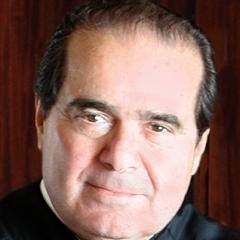
Antonin Scalia
Antonin Scalia

Antonin Scalia was an Associate Justice of the Supreme Court of the United States, serving from 1986 until his death in 2016. He was a prominent figure in American law and politics, known for his conservative judicial philosophy and his influential role in shaping American constitutional law. more

You May Also Like

“Mephistopheles' contentious, often ambiguous relationship to Faustus is a reference to tantra just as it is to alchemy. It resembles the shifting tactics of a guru who varies his approach to his pupil in order to dissolve his resistances and prepare him for wider states of consciousness. Both Faustus and the tantric aspirant stimulate and indulge their senses under the guidance of their teachers who encourage them to have sexual encounters with women in their dreams. Both work with magical diagrams or yantras, exhibit extraordinary will, "fly" on visionary journeys, acquire powers of teleportation, invisibility, prophecy, and healing, and have ritual intercourse with women whom they visualize as goddesses. The tantrist [sic] is said to become omniscient as a result of his sacred "marriage," and Faustus produces an omniscient child in his union with the visualized Helen, or Sophia.”

“Yet the freedom of the artist, the pure beauty of nature, and the liberty of each of us to live our lives as we choose are still under threat—and despite all our progress, this threat may be greater now than in many years. The slave religions have used the weapons of fear, guilt, superstition, greed, terror and paranoia to achieve significant gains in political, ideological, and cultural power during recent decades, notably in the forms of militant Islamic fundamentalism and Christian dominionism. It takes strength to stand in defense of beauty, truth and freedom, and strength requires unity. Even while we celebrate our diversity and individuality with justified exuberance, it is critical that we remember those principles we hold in common, and those things we owe to each other as brothers and sisters of this, our Holy Order.”

“Parts of rural China are seeing a burgeoning market for female corpses, the result of the reappearance of a strange custom called "ghost marriages." Chinese tradition demands that husbands and wives always share a grave. Sometimes, when a man died unmarried, his parents would procure the body of a woman, hold a "wedding," and bury the couple together... A black market has sprung up to supply corpse brides. Marriage brokers—usually respectable folk who find brides for village men—account for most of the middlemen. At the bottom of the supply chain come hospital mortuaries, funeral parlors, body snatchers—and now murderers. —"China's Corpse Brides: Wet Goods and Dry Goods" The Economist, July 26, 2007”

“In one respect, though, the Court received unfair criticism for Bush v. Gore—from those who said the justices in the majority "stole the election" for Bush. Rather, what the Court did was remove any uncertainty about the outcome. It is possible that if the Court had ruled fairly—or better yet, not taken the case at all—Gore would have won the election. A recount might have led to a Gore victory in Florida. It is also entirely possible that, had the Court acted properly and left the resolution of the election to the Florida courts, Bush would have won anyway. The recount of the 60,000 undervotes might have resulted in Bush's preserving his lead. The Florida legislature, which was controlled by Republicans, might have stepped in and awarded the state's electoral votes to Bush. And if the dispute had wound up in the House of Representatives, which has the constitutional duty to resolve controversies involving the Electoral College, Bush might have won there, too. The tragedy of the Court's performance in the election of 2000 was not that it led to Bush's victory but the inept and unsavory manner with which the justices exercised their power.”

“In public at least, Roberts himself purports to have a different view of the Court than his conservative sponsors. "Judges are like umpires," he said at his confirmation hearing. "Umpires don't make the rules; they apply them." Elsewhere, Roberts has often said, "Judges are not politicians." None of this is true. Supreme Court justices are nothing at all like baseball umpires. It is folly to pretend that the awesome work of interpreting the Constitution, and thus defining the rights and obligations of American citizenship, is akin to performing the rote […] task of calling balls and strikes. When it comes to the core of the Court's work, determining the contemporary meaning of the Constitution, it is ideology, not craft or skill, that controls the outcome of cases.”

“Random chance—a freakishly close vote in the single decisive state—gave the Supreme Court the chance to resolve the 2000 presidential election. The character of the justices themselves turned that opportunity into one of the lowest moments in the Court's history. The struggle following the election of 2000 took thirty-six days, and the Court was directly involved for twenty-one of them. Yet over this brief period, the justices displayed all of their worst traits—among them vanity, overconfidence, impatience, arrogance, and simple political partisanship. These three weeks taint an otherwise largely admirable legacy. The justices did almost everything wrong. They embarrassed themselves and the Supreme Court.”

“أفكاري تتتئسر جوه ضلوعي أفراحي تموت تحت دموعي أقلامي تتكسر ويا طموحي أوراقي تتحرق وسط شموعي كلامي يتنطق رغم سكوتي أحس إن أنا فرحان إزاي ؟! والجرح يا هوه ، يا موتي هربان وجبان ولا أنا للفرح جعان مش عارف، مش حاسس، مش قادر أكون أنا الإنسان ناسي وحوش أموالي قروش طموحاتي فشوش صهيون بيخون حياتنا تهون لو نقدر نتحرر بيها أرضي بتتاخد مدرستي معايا بتتعاهد متسبنيش .... ما تبعنيش وأنا مش قادر ليها أخون مش عارف عنها أزود مش قادر لحدودها أصون مش قادر لتلاميذها أكون حامي ،رادع، عنهم مدافع ويا إخواتي ،وسط حياتي، مع أحفادي ضد الصهيون لو يجتمعوا ، لوا يفتكروا يوم كان بينا صلاح الدين ليه نتهان ،ليه نتباع ليه نستناهم راجعين ليه ما نكونش أسود قادرين ليه ما نكونش وحوش عارفين إن القوة ويا الحكمة ولو وسط الضلمة ضد الظلم تحقق عدل تولد نور ليه ما أكونش صلاح الدين ليه ما تكونش بطل حطين ليه ما نكونش أسود قادرين ليه مانكونش عرب متحدين ، منتصرين وسط ولادنا وجوه بلادنا نصبح نمسي للراس رافعين”

“There were two kinds of cases before the Supreme Court. There were abortion cases—and there were all the others. Abortion was (and is) the central legal issue before the Court. It defined the judicial philosophies of the justices. It dominated the nomination and confirmation process. It nearly delineated the difference between the national Democratic and Republican parties.”