Quotessence
Home / Quotes / Quote by Nikos Kazantzakis

Quote by Nikos Kazantzakis

Work

The Selected Letters of Nikos Kazantzakis

This book presents a curated selection of letters written by the renowned Greek author Nikos Kazantzakis, offering insights into his personal life, literary thoughts, and cultural perspectives. more

Author
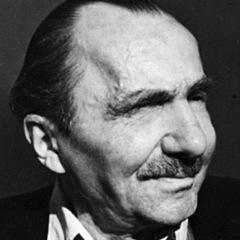
Nikos Kazantzakis
Nikos Kazantzakis

Nikos Kazantzakis, born on February 18, 1883, and died on October 26, 1957, was one of the most prominent Greek writers of the 20th century. Known for his profound exploration of human nature and philosophical thoughts, his works have transcended literature, philosophy, and religion. more

You May Also Like

“They look at us clean-haired, well-behaved children in our maroon blazers, starched white shirts and striped ties with contempt. Their holey grey socks are crumpled around their ankles, they don't wear silly short-shorts like all the other boys in my – their shorts are long, right down to their scabby knees. They have greasy brown fringes hanging in their eyes. One of them has a scar on his freckled cheek. I think to myself, Thank goodness, two good-looking boys at school at last. I want to clap my hands together with glee. I don't know where this thought comes from. I don't recognize it. I've never cared about boys before, up until now they've been invisible to me, not important in my world. No one's ever told me about bad boys, that they're sexy and compelling, or to stay away from them. I work all this out by myself, today - at eight years old, in Class Three.”

“Meghiya, practice the contemplations on death, compassion, impermanence, and the full awareness of breathing: “To overcome desire, practice the contemplation on a corpse, looking deeply at the nine stages of the body’s decay from the time the breathing ceases to the time the bones turn to dust. “To overcome anger and hatred, practice the contemplation on compassion. It illuminates the causes of anger and hatred within our own minds and in the minds of those who have precipitated it. “To overcome craving, practice the contemplation on impermanence, illuminating the birth and death of all things. “To overcome confusion and dispersion, practice the contemplation on the full awareness of breathing. “If you regularly practice these four contemplations, you will attain liberation and enlightenment.”

“If you were offered the chance to live your own life again, would you seize the opportunity? The only real philosophical answer is automatically self-contradictory: 'Only if I did not know that I was doing so.' To go through the entire experience once more would be banal and Sisyphean—even if it did build muscle—whereas to wish to be young again and to have the benefit of one's learned and acquired existence is not at all to wish for a repeat performance, or a Groundhog Day. And the mind ought to, but cannot, set some limits to wish-thinking. All right, same me but with more money, an even sturdier penis, slightly different parents, a briefer latency period… the thing is absurd. I seriously would like to know what it was to be a woman, but like blind Tiresias would also want the option of re-metamorphosing if I wished. How terrible it is that we have so many more desires than opportunities.”