Quotessence
Home / Quotes / Quote by Clive Cussler

Quote by Clive Cussler

“I must have entered a time warp or I've fallen into the Twilight Zone. Which is it?" "Neither. You're at the harbor in San Felipe, and you're looking at your home for the next two weeks." "Good lord, an honest-to-God steamboat with a walking beam engine and side paddlewheels." "I must admit it does have an air of Mark Twain about it." "What do you want to bet it ferried Grant's troops across the Mississippi to Vicksburg?”

Quote by Clive Cussler

Work

Inca Gold

Browse quotes and source details for this work. more

Author

Clive Cussler
Clive Cussler

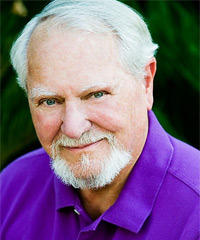
Clive Cussler is an American novelist known for his adventure novels. His works often revolve around themes of archaeology, history, and adventure, and are well-loved by readers. more

You May Also Like

“At start of spring I open a trench In the ground. I put into it The winter’s accumulation of paper, Pages I do not want to read Again, useless words, fragments, errors. And I put into it the contents of the outhouse: light of the suns, growth of the ground, Finished with one of their journeys. To the sky, to the wind, then, and to the faithful trees, I confess my sins: that I have not been happy enough, considering my good luck; have listened to too much noise, have been inattentive to wonders, have lusted after praise. And then upon the gathered refuse, of mind and body, I close the trench folding shut again the dark, the deathless earth. Beneath that seal the old escapes into the new.”

“As a people, we have been tolled farther and farther away from the facts of what we have done by the romanticizers, whose bait is nothing more than the wishful insinuation that we have done no harm. Speaking a public language of propaganda, uninfluenced by the real content of our history which we know only in a deep and guarded privacy, we are still in the throes of the paradox of the “gentleman and soldier.” However conscious it may have been, there is no doubt in my mind that all this moral and verbal obfuscation is intentional. Nor do I doubt that its purpose is to shelter us from the moral anguish implicit in our racism—an anguish that began, deep and mute, in the minds of Christian democratic freedom-loving owners of slaves.”

“Sometimes in life, you become aware that you have more money than friends. But let me tell you, it's not about the numbers or material possessions. True wealth lies in the genuine connections we cherish, the kind hearts that surround us, and the loyal souls that stand by our side through thick and thin. So, do not let the illusion of wealth deceive you, for those who have nothing but genuine love and support are richer than any fortune in the world. It is during testing times, when you see the true colors of those around you, and that is where your true wealth truly lies.”

“At this point, I want to say point-blank what I hope is already clear: though agrarianism proposes that everybody has agrarian responsibilities, it does not propose that everybody should be a farmer or that we do not need cities. Nor does it propose that every product be a necessity. Furthermore, any thinkable human economy would have to grant to manufacturing an appropriate and honorable place. Agrarians would insist only that any manufacturing enterprise should be formed and scaled to fit the local landscape, the local ecosystem, and the local community, and that it should be locally owned and employ local people. They would insist, in other words, that the shop or factory owner should not be an outsider, but rather a sharer in the fate of the place and the community. The deciders should live with the results of their decisions.”

“In the last generation, this country produced one of the most eminent men of science in the whole world. His name was quite unknown among us while he lived, and it is still unknown. Yet I may say without too great exaggeration that when I heard it mentioned in a professional assembly in the Netherlands two years ago, everybody got down under the table and touched their foreheads to the floor. His name was Josiah Willard Gibbs.”

“Willard Gibbs is the type of the imagination at work in the world. His story is that of an opening up which has had its effect on our lives and our thinking; and, it seems to me, it is the emblem of the naked imagination —which is called abstract and impractical, but whose discoveries can be used by anyone who is interested, in whatever 'field'— an imagination which for me, more than that of any other figure in American thought, any poet, or political, or religious figure, stands for imagination at its essential points.”