Quotessence
Home / Quotes / Quote by Colson Whitehead

Quote by Colson Whitehead

“I'm what the botanists call a hybrid," he said the first time Cora heard him speak, "A mixture of two different families. In flowers, such a concoction pleases the eye. When that amalgamation takes its shape in flesh and blood, some take great offence. In this room we recognize it for what it is - a new beauty come into the world, and it is in bloom all around us.”

Quote by Colson Whitehead

Work

The Underground Railroad

Browse quotes and source details for this work. more

Author
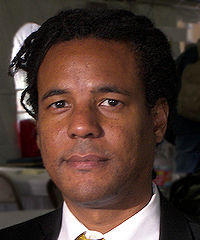
Colson Whitehead
Colson Whitehead

Colson Whitehead is an American novelist known for his distinctive literary style and profound insights into historical themes. His works cover a range of topics from slavery to modern urban life, with his 'New York Trilogy' and 'The Underground Railroad' being particularly notable. more

You May Also Like

“The iron horse still rumbled through the tunnel when she woke. Lumbly's words returned to her: "If you want to see what this nation is all about, you have to ride the rails. Look outside as you speed through, and you'll find the true face of America." It was a joke, then, from the start. There was only darkness outside the windows on her journeys, and only ever would be darkness.”

“This beast that puffed smoke and spat fire and shrieked like a devil of an alien tribe; that split the silence as hideously as the long track split the once smooth plain; that was made of iron and wood; this thing of the white man’s, coming from out of the distance where the Great Spirit lifted the dawn, meant the end of the hunting-grounds and the doom of the Indian. Blood had flowed; many warriors lay in their last sleep under the trees; but the iron monster that belched fire had gone only to return again. Those white men were many as the needles of the pines. They fought and died, but always others came. The chief was old and wise, taught by sage and star and mountain and wind and the loneliness of the prairie-land. He recognized a superior race, but not a nobler one. White men would glut the treasures of water and earth. The Indian had been born to hunt his meat, to repel his red foes, to watch the clouds and serve his gods. But these white men would come like a great flight of grasshoppers to cover the length and breadth of the prairie-land. The buffalo would roll away, like a dust-cloud, in the distance, and never return. No meat for the Indian — no grass for his mustang — no place for his home. The Sioux must fight till he died or be driven back into waste places where grief and hardship would end him. Red and dusky, the sun was setting beyond the desert. The old chief swept aloft his arm, and then in his acceptance of the inevitable bitterness he stood in magnificent austerity, somber as death, seeing in this railroad train creeping, fading into the ruddy sunset, a symbol of the destiny of the Indian — vanishing — vanishing — vanishing —”

“For the rest the old trapper was glad to see the last of habitations, and of men, and of the railroad. Slingerland hated that great, shining steel band of progress connecting East and West. Every ringing sledge-hammer blow had sung out the death-knell of the trapper’s calling. This railroad spelled the end of the wilderness. What one group of greedy men had accomplished others would imitate; and the grass of the plains would be burned, the forests blackened, the fountains dried up in the valleys, and the wild creatures of the mountains driven and hunted and exterminated. The end of the buffalo had come — the end of the Indian was in sight — and that of the fur-bearing animal and his hunter must follow soon with the hurrying years. Slingerland hated the railroad, and he could not see as Neale did, or any of the engineers or builders. This old trapper had the vision of the Indian — that far-seeing eye cleared by distance and silence, and the force of the great, lonely hills. Progress was great, but nature undespoiled was greater. If a race could not breed all stronger men, through its great movements, it might better not breed any, for the bad over-multiplied the good, and so their needs magnified into greed. Slingerland saw many shining bands of steel across the plains and mountains, many stations and hamlets and cities, a growing and marvelous prosperity from timber, mines, farms, and in the distant end — a gutted West.”

“But a choice made is made, it cannot be changed. Things happened as they happened. It is possible to imagine all kinds of different routes across the continent, or a better way for the government to help private industry, or maybe to have the government build and own it. But those things didn’t happen, and what did take place is grand. So we admire those who did it—even if they were far from perfect—for what they were and what they accomplished and how much each of us owes them.”

“America is a series of river crossings; these rivers made us rich. They left the soil that has made us the breadbasket of the world, whether it’s the James or the Ohio, the Mississippi or the Missouri. The great rivers define us and made transportation possible until the railroads revolutionized life in the 1830s and 1840s.”

“Michael is an excellent storyteller and has done a wonderful job depicting Luther, and the other black characters in this book. He has done his homework and depicts many historical facts about Nicodemus in a most enlightening and creative way. It has been a pleasure working with someone who has made a concerted effort to get things right. Angela Bates Nicodemus Descendant/Historian Executive Director The Nicodemus Historical Society and Museum”